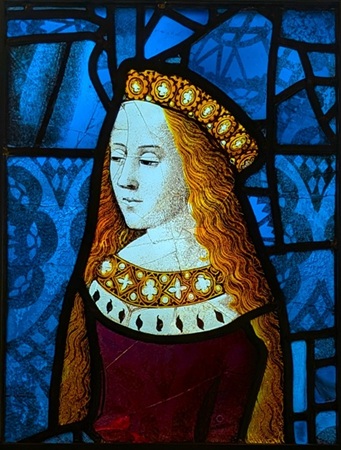
Hello! It’s good to be back. I hope you had a wonderful summer. I’m excited to share some of the fascinating art and artifacts I came across during my recent travels. Today on Museum Bites we’re taking a closer look at Cecily of York, a not-so-famous Medieval princess. Handcrafted in stained glass, Cecily’s portrait is delicate, somber, and confined—a striking metaphor for her turbulent life. Join me for a closer look, but first a brief background on the art of stained glass windows…
Princess Cecily (c1482-1483) Burrell Collection
Glasgow, Scotland, photo by cjverb (2026)
Colorful Canvas: The craft of making stained glass windows has remained relatively unchanged since it began centuries ago. The design of the window is first sketched on paper or prior to the invention of paper, a wooden tabletop. Next, colored pieces of glass are cut to fit the various sections of the design and fine details such as facial features, textures, and motifs are painted on the glass. These pieces are then fired so the painted images are permanently fused onto the glass. Next, the glass pieces are assembled like a jigsaw puzzle and held in place by cames, grooved strips made of lead. The cames are soldered together, attached to a metal frame, and the frame is then mounted in the window.
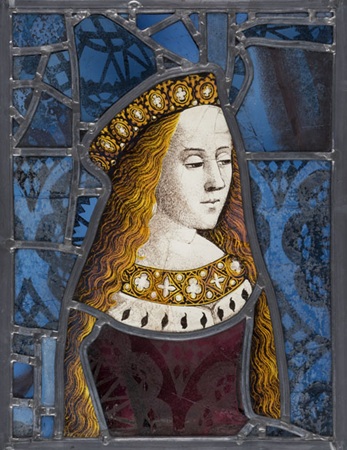
Back view of Stained Glass Portrait of Princess Cecily (c1482-1483)
Burrell Collection, Glasgow, Scotland
Royal Portrait: Princess Cecily’s stained glass portrait was created when she was 13 or 14 years old. Commissioned by her father, King Edward IV of England (1442-1483), it was originally part of the Royal Window located in the northwest transept of Canterbury Cathedral. This massive stained glass window also includes portraits of Cecily’s parents and siblings.
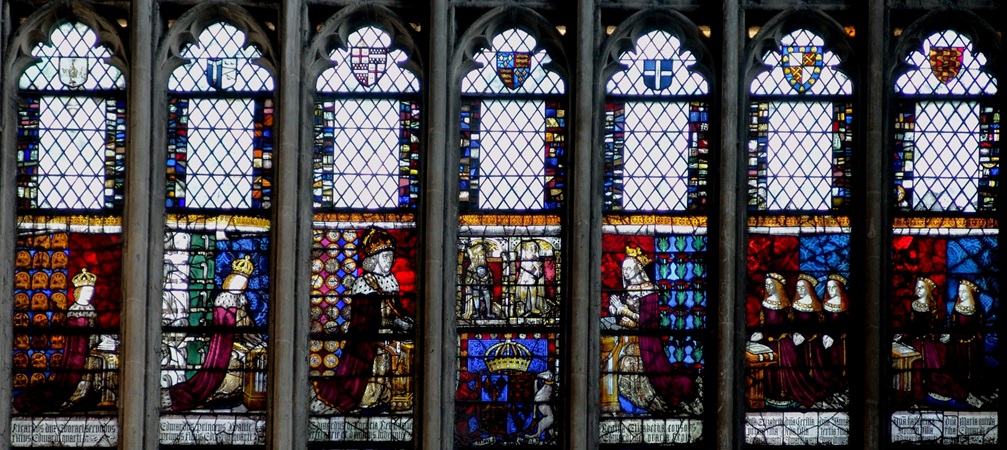
Royal Window (modern restoration) Canterbury Cathedral
Left to right: Richard of Shrewsbury, Edward Prince of Wales, King Edward IV,
Queen Elizabeth Woodville, Elizabeth, Cecily, Anne, Catherine & Bridget of York
Photo (cropped) by Tilman2007, Wikimedia Commons
Medieval Mood: Let’s take a closer look at Cecily’s original portrait. Note how Cecily’s pale skin, golden hair and coronet pop against the deep, blue background. Compared to earlier stained glass images which look flat and cartoonish, Cecily appears more true-to-life. For example, the shading along her hairline and jaw, as well as her eyelids and nose adds depth.
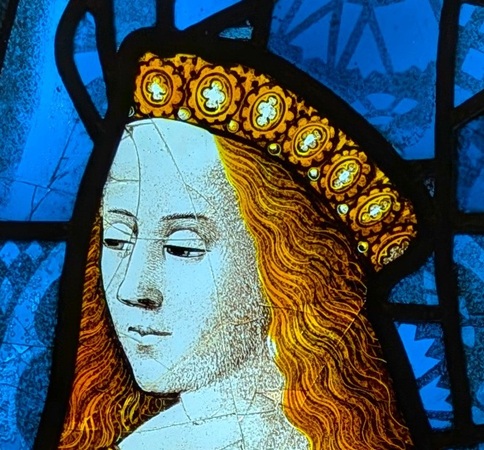
Closeup of Princess Cecily (c1482-1483) Burrell Collection
Glasgow, Scotland, photo by cjverb (2026)
Intricate details such as her pearl-encrusted crown and neckline, the plushness of her blood-red dress, and the waviness of her hair add texture. Notice how a few stray wisps curl at the ends. Cecily’s half-lidded expression gives her a bored look, but perhaps she is expressing regal piety as opposed to any teenage angst.
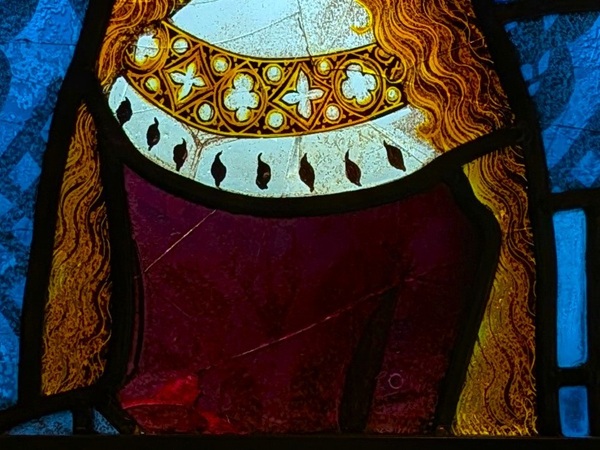
Closeup of Princess Cecily (c1482-1483) Burrell Collection
Glasgow, Scotland, photo by cjverb (2026)
In its original setting, Cecily’s portrait was flanked and frankly lost in the confines of her famous family. In 1643, the Royal Window was damaged (note the cracks in the glass), and this panel of Cecily was removed in 1789. A modern restoration of the Royal Window has subsequently replaced the original. However, as a standalone, we can better appreciate Cecily’s portrait and the exquisite details of this gorgeous work of art.
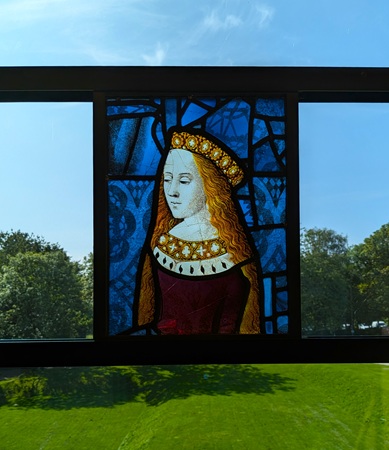
Princess Cecily (c1482-1483) Burrell Collection
Glasgow, Scotland, photo by cjverb (2026)
War of the Roses: Cecily of York (1469-1507) was born in the spring of 1469 in the midst of an English civil war between the House of York and the House of Lancaster. She was the third eldest child of King Edward IV and his wife, Queen Consort, Elizabeth Woodville (1437-1492). When Cecily was a year old, supporters of the House of Lancaster staged an uprising. Her mother fled with Cecily and her siblings to Westminster Abbey where they sought sanctuary. Her father was forced into exile, but within a year, he reclaimed the throne and for a time, Cecily’s life was stable.
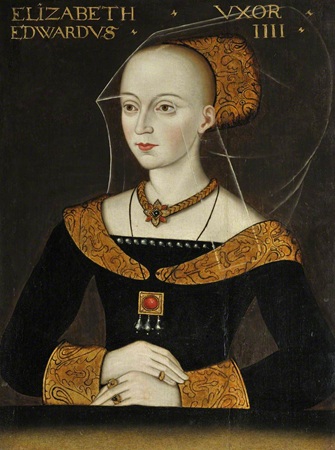
Elizabeth Woodville (after 1500), Unknown Artist
Queens’ College, Wikimedia Commons
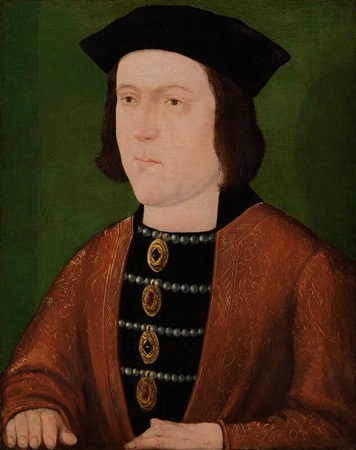
King Edward IV (c1540) by Unknown English Artist
National Portrait Gallery
Princess Prep: Along with her sisters and all royal girls of the time, Cecily was raised to be an accomplished Medieval princess with the goal of attaining an advantageous marriage. She learned to read and write in English and French, as well as how to dance and embroider. Cecily’s father planned for her to become the future queen of Scotland, a strategic match for the monarch. However, when Cecily was 14, her father died unexpectedly of either pneumonia or typhoid. The subsequent battle for the throne took an even more dangerous turn.
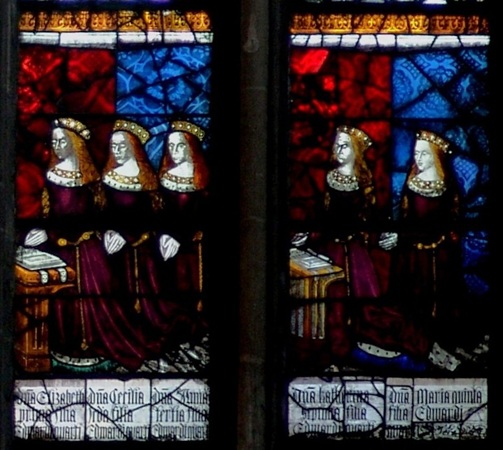
Closeup of modern restoration of Royal Window (Cecily is 2nd from Left)
Canterbury Cathedral, photo (cropped) by Tilman2007, Wikimedia Commons
Princes in the Tower: At age 12, Cecily’s brother, Edward became king, but before he was coronated, their uncle Richard imprisoned him along with their 9-year-old brother, who is also named Richard. While Cecily, her mother and sisters once again sought sanctuary in Westminster Abbey, Uncle Richard declared the marriage of Cecily’s parents invalid and their children illegitimate. He next claimed the throne and Cecily’s young brothers were never heard from again. Many believe they were murdered by their uncle.
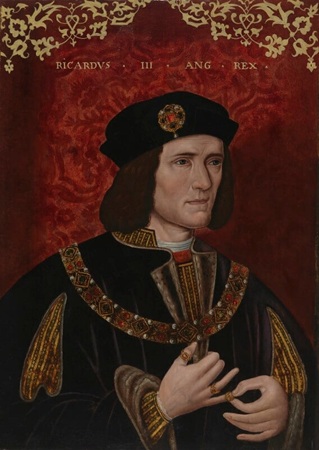
King Richard III (late 16th century)
by Unknown Artist, National Portrait Gallery
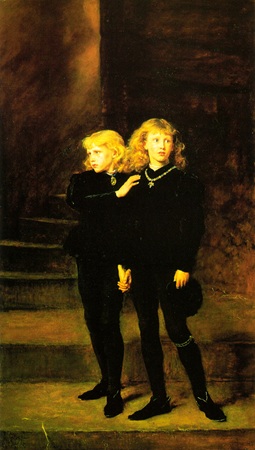
Princes in the Tower (1878) by John Everett Millais
Royal Holloway University of London, WikiArt
Marriage-Go-Round: The newly coronated King Richard III (1452-1485) convinced Cecily’s mother that he would not harm her or her daughters. Cecily was subsequently married off to Ralph Scrope, a low ranking noble, when she was approximately 16 years old. In the summer of 1485, King Richard III was defeated and killed at the Battle of Bosworth Field bringing the War of the Roses to an end. Henry Tudor (1457-1509) became king, and he repealed the annulment of Cecily’s parents’ marriage and the illegitimacy of their children. King Henry VII then married Cecily’s older sister, Elizabeth of York (1466-1503). Cecily’s marriage was also annulled, and at 18, she was married to John Welles, the 1st Viscount of Welles, who was 19 years her senior. This too, was a politically advantageous move for King Henry VII.
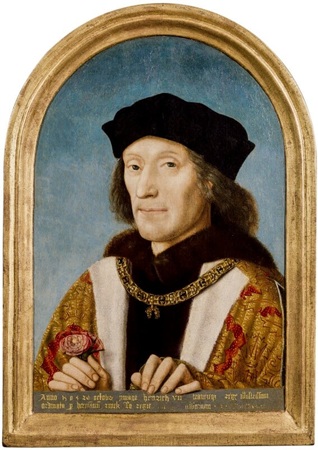
King Henry VII (1505) by Unknown Netherlandish Artist
National Portrait Gallery
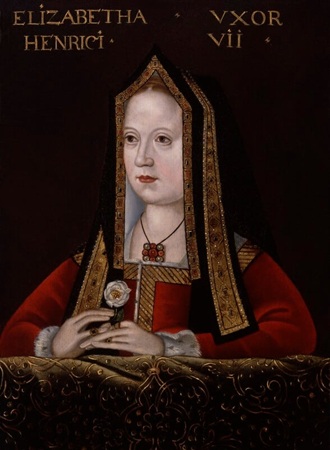
Elizabeth of York (late 16th century)
Artist Unknown, National Portrait Gallery
Wight Wedding: Widowed around the age of 30, Cecily moved to her sister, Elizabeth’s royal household. A few years later she caused a scandal when she married Thomas Kyme (1465-1547?), a member of the English gentry and significantly lower status. It is unclear if Cecily married for love, a means of escape, a rebellious show of independence, or something else. What we do know is King Henry VII was unhappy with Cecily’s unconventional marriage, and in retribution, confiscated some of her lands. Cecily and her new husband moved to the Isle of Wight and they had two children, Margaret and Richard. In August of 1507, when her children were still quite young, Cecily died of unknown causes. She was just 38 years old.
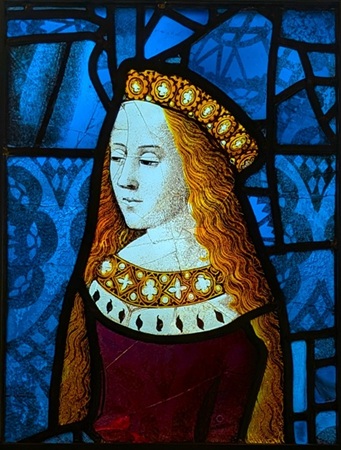
Princess Cecily (c1482-1483) Burrell Collection
Glasgow, Scotland, photo by cjverb (2026)
Since Cecily had fallen out of favor with the royal family, it is unclear where she was buried. She was possibly interred at Quarr Abbey, which was razed during the Reformation or the friary in King’s Langley, which closed as part of her nephew, King Henry VIII’s (1491-1547) break with the Catholic Church.
Arty Facts
- The art of stained glass windows reached its height in Europe during the Gothic Era (mid-12th to 16 century) when massive cathedrals soared toward the heavens.
- In medieval churches, stained glass windows were more than art, they also taught a mostly illiterate congregation Biblical stories and the lives of the saints. They were also a showcase for the rich and powerful.
Want to dig deeper?
Click on this Historic UK: The Wars of the Roses link to learn more about the English civil war that waged during Cecily’s lifetime.
Click on this Encyclopedia Britannica: King Richard III of England link to learn more about Richard III and the princes in the tower.
And finally, for a brief demonstration of stained glass making, click on this Victoria and Albert Museum: How Was It Made? Stained Glass Window link.
That concludes our look at Princess Cecily of York. I’ll be back next week with more Museum Bites. Until then be safe, be kind, and take care😊
Sources:
Burrell Collection: Princess Cecily (c1482-1487)
Encyclopedia Britannica: George Plantagenet Duke of Clarence
Encyclopedia Britannica: King Edward IV of England
Encyclopedia Britannica: King Richard III of England
Encyclopedia Britannica: Wars of the Roses
Historic UK: The Wars of the Roses
Metropolitan Museum of Art: Stained Glass in Medieval Europe
National Portrait Gallery: King Edward IV (c1540) by Unknown Artist
The Stained Glass Association of America: History of Stained Glass
University of Cambridge: The Wars of the Roses
Victoria and Albert Museum: How Was It Made? Stained Glass Window
Victoria and Albert Museum: Stained Glass An Introduction
Westminster Abbey: Edward V & Richard Duke of York
WikiArt: Princes in the Tower (1878) by John Everett Millais
Wikimedia Commons: Canterbury Cathedral Photo by Hans Musil
Wikimedia Commons: Chartres Cathedral Photo by PtrQs
Wikimedia Commons: Elizabeth Woodville (after 1500) Unknown Artist
Wikimedia Commons: Royal Window Canterbury Cathedral Photo by Tilman2007


Leave a comment