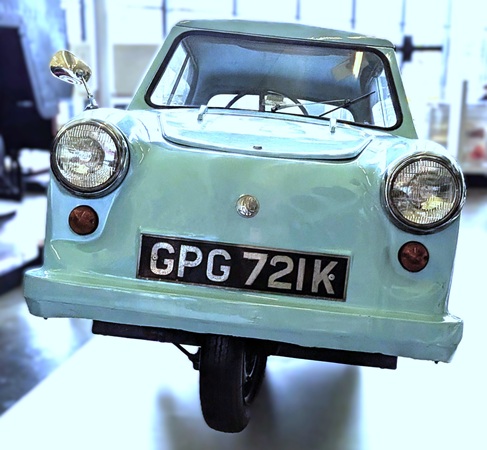
Fasten your seatbelts because today on Museum Bites we’re taking a spin in a Wee Bluey. Although it doesn’t take flight like the Weasleys’ flying car, this three-wheeled wonder zipped down British roadways offering its drivers a taste of freedom and a dangerous thrill ride. Buckle up it’s time for takeoff!
“Wee Bluey” AC Cars Model 70 (1971)
Riverside Museum Glasgow, photo by cjverb (2026)
Innovative Invacar: Wee Bluey (AC Model 70, 1971) is one of several nicknames for the Invacar, an ice blue, three-wheeled vehicle that was specifically built for people with disabilities in the United Kingdom. The original prototype was created by engineer, Oscar “Bert” Bertram Greeves (1906-1993) after he attached a lawnmower engine to his cousin’s wheelchair. Greeves tinkered with the design and subsequently founded Invacar Ltd in 1946.
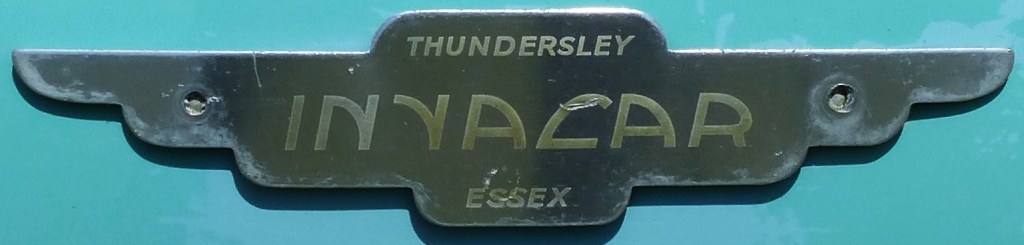
Invacar Limited Emblem, photo by Buck-t, Wikimedia
Post-War Independence: After World War II, the UK’s Ministry of Health and Social Security began issuing Invacars to veterans with disabilities. These Wee Blueys supported post-war rehabilitation programs because they provided vets with an independent way to get to work and reintegrate into society. The UK government subsequently expanded the program to include civilians with disabilities. To meet the increased demand, companies like AC Cars and CB Harper also obtained contracts from the UK government to manufacture their versions of the Invacar.
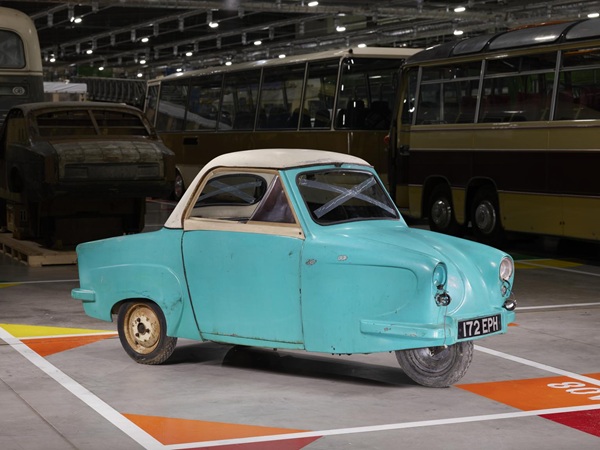
Harper Mark VI Three-Wheeled Car (c1957-1960) Science Museum Group
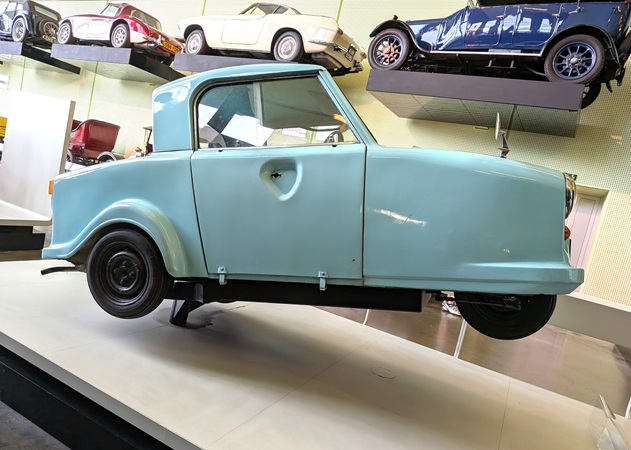
Design Details: The Wee Bluey on display at the Riverside Museum in Glasgow is an AC Model 70 built by AC Cars in 1971. A single seat slides sideways to help drivers enter and exit more easily. There is also ample space inside to store personal items.
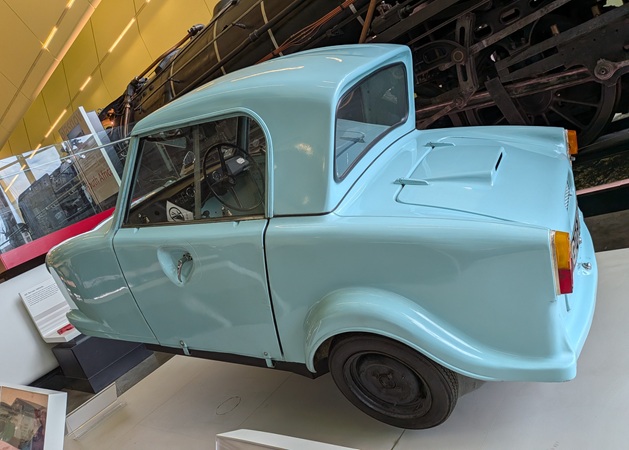
“Wee Bluey” AC Cars Model 70 (1971)
Riverside Museum Glasgow, photo by cjverb (2026)
Powered by a flat-twin engine with a continuously variable automatic transmission (CVT), and rear-wheel drive, this Wee Bluey weighs in at 897 lbs. (407 kg). It could reach a top speed of 82 mph (132 km/h) and get 40 miles per gallon in the UK (33 mpg US*). From 1957 to the late 1970s, over 1,200 Invacars rolled off the assembly lines of AC Cars. Click on this FastLaps: AC Model 70 Invacar Specs link if you’d like more details.
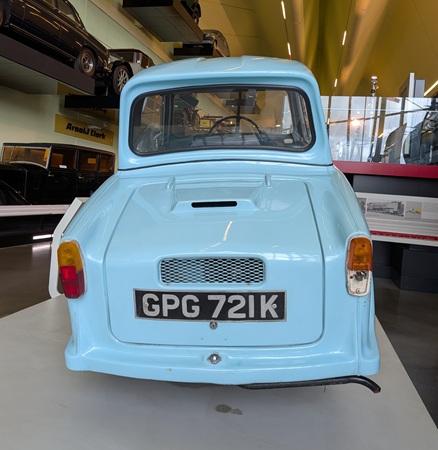
“Wee Bluey” AC Cars Model 70 (1971)
Riverside Museum Glasgow, photo by cjverb (2026)
*Note the amount of fluid in a gallon differs between the US and UK see Arty Facts below for more info.
Test Drive: Qualifying for an Invacar did not require long hours in driver’s ed classes, pesky exams, dreaded road tests or long lines at the DMV. Instead, the Invacar was treated like a prosthetic. Once the proper paperwork was filled out, disabled individuals who were 16 or older met with an engineer at a medical supply center and modifications were made based on the driver’s needs. For example, Invacars could be outfitted with a standard steering wheel, handlebars or tiller-steering. Next users took a test drive and once they learned how to stop, they were given the green light to go.
The guy who assessed me was an engineer and he said:
‘Sit in this, I’m going to push you and I want you to push the brake down to see if you can stop.’
So we did that, I stopped it and he said, ‘Right, you’re quite capable of driving’ – and that’s how I passed my test.
~Sir Bert Massie, BBC News: Gone for a Decade: The Invalid Carriage, June 29, 2013
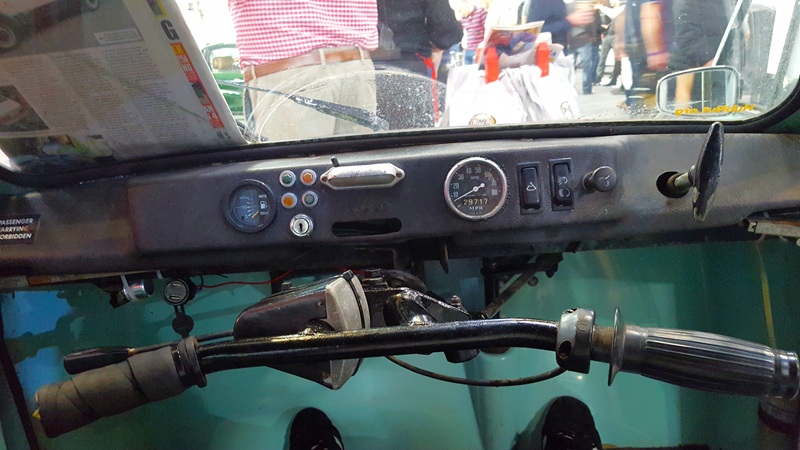
Invacar Interior, photo by Kieran White, Wikimedia
Perks & Perils: Driving a Wee Bluey came with several perks. In addition to being paid for and maintained by the government, disabled drivers did not need to rely on others to travel where they pleased. And if a football (soccer) game was on the agenda, Wee Bluey drivers were offered free entry with pitch-side parking.
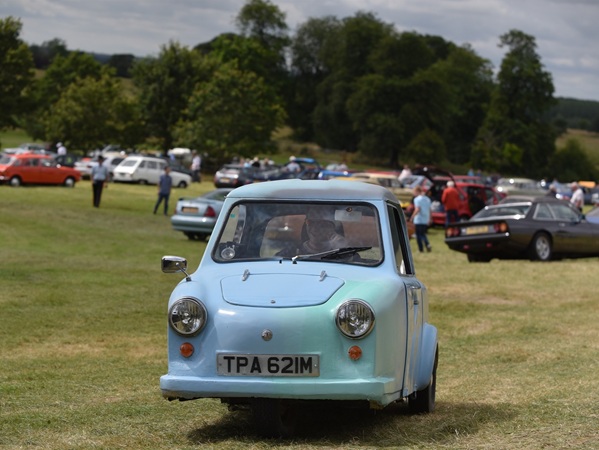
Invacar at the Festival of the Unexceptional (2019)
Photo (cropped) by Tony Harrison, Wikimedia
Despite these perks, Wee Bluey also came with some serious drawbacks. Its fiberglass body provided little protection in a crash. It was also prone to rollovers, getting stuck in the snow, and catching fire. Furthermore, the lack of additional seating was limiting, especially for drivers with families.
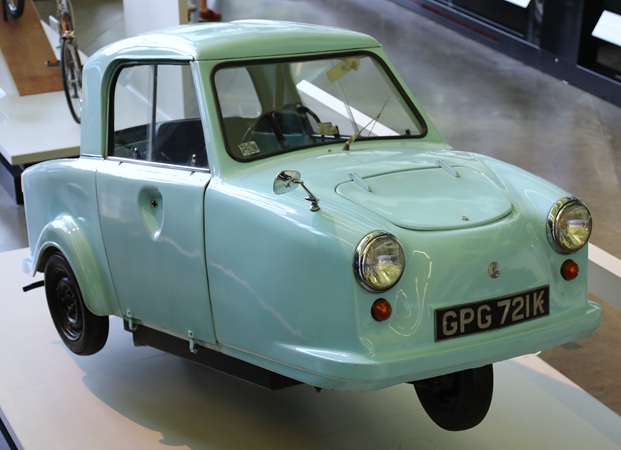
“Wee Bluey” AC Cars Model 70 (1971)
Riverside Museum Glasgow, photo by Geni, Wikimedia
Safety concerns began to mount and in 1976, the UK government stopped issuing Invacars and began phasing in a new program that provided disabled drivers with the necessary funds to buy and modify standard cars for their use. At this time, there were over 20,000 Wee Blueys on the road and many drivers were reluctant to give them up. Gradually, Wee Blueys began to disappear and in 2003 they were officially banned.
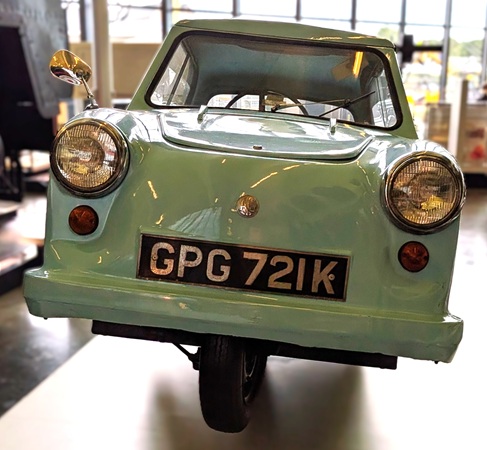
“Wee Bluey” AC Cars Model 70 (1971)
Riverside Museum Glasgow, photo by cjverb (2026)
Today, the UK’s Motability Scheme includes an allowance to lease a scooter, powered wheelchair or wheelchair accessible vehicle and covers insurance, maintenance, repairs, and funding for driving lessons. Yes! Standard UK driving lessons and tests are required for those requesting a Scheme vehicle. What began as a post-war effort to foster self-sufficiency, the Invacar initiative has evolved into a safer, more personalized program for drivers with disabilities.
Arty Facts
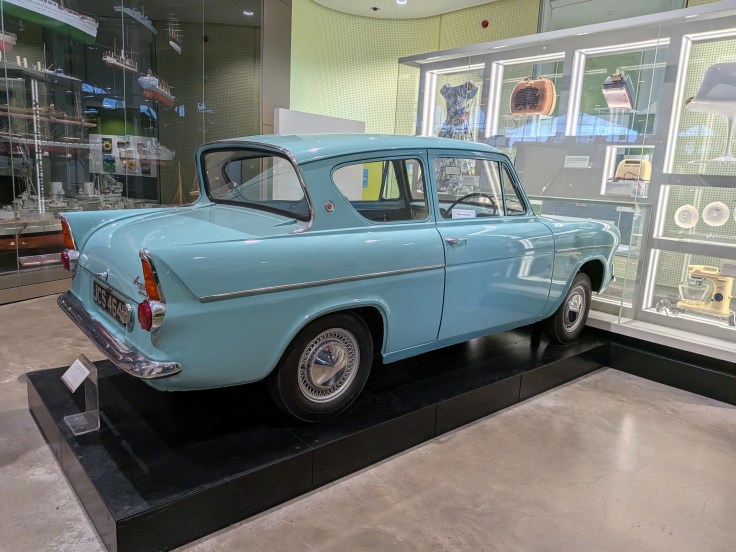
Ford Anglia 105E, Riverside Museum Glasgow
Photo by cjverb (2026)
- The Weasley’s flying car featured in the Harry Potter movies is a Ford Anglia 105E. Manufactured from 1959 to 1967, the Anglia had a top speed of 76.8 mph, slightly below Wee Bluey’s 82 mph.
- The UK gallon is measured in Imperial fluid ounces and has 20% more volume than a US gallon. This is why a pint in the UK is larger than a pint in the US. Something to keep in mind next time you’re at the pub🍻
- In addition to Wee Bluey, the Invacar has been called a buggy, trike, Noddy car, AC, sardine can on wheels, and plastic pig.
If you’d like to go for a virtual spin in a Wee Bluey, click on this 1972 Invacar Model 70 link courtesy of HubNotes. That wraps up our look at Invacars. I’ll be back next week with more Museum Bites, until then be safe, be kind, and take care🙂
Sources:
Americans with Disabilities Act: Guidelines for Writing About People with Disabilities
BBC News: Gone for a Decade: The Invalid Carriage (June 2013)
Check Your Math: Convert US Gallons to Imperial Gallons
FastLaps: AC Model 70 Invacar Specs
HubNotes: 1972 Invacar Model 70 with handlebars controls
Hull Museums & Gallery: Invacar Motorcar
Independent: Obituary Bert Greeves (1906-1993)
Museum of Disability History: Invacar, Designed by Oscar Bertram Greeves
National Motor Museum: AC 70 Carriage
National Motor Museum: Ford Anglia 105E ‘Flying Car;
Science Museum Group: Harper Mark VI Three-Wheeled Car
United Kingdom Government: Inclusive Language-Words to Use and Avoid When Writing About Disability
Which Mobility Car: Thundersley Invacar Model 70
Wikimedia Commons: Invacar at Riverside Museum Glasgow photo by Geni
Wikimedia Commons: Invacar Emblem photo by Buch-t
Wikimedia Commons: Invacar Interior photo by Kieran WhiteWikipedia: Invacar


.jpg)
Leave a Reply