Oktoberfest is in full swing and today on Museum Bites we’re raising a glass (Prost!) to Bavarian artist, Martin Zürn and his delightful sculpture, Saint Walburga of Eichstätt with Nuns (c1600-1625 CE). Born into a family of saintly go-getters, this 8th century nun busted through more than one stained-glass ceiling. Join me as we take a closer look at her life and Zürn’s cheery portrayal.
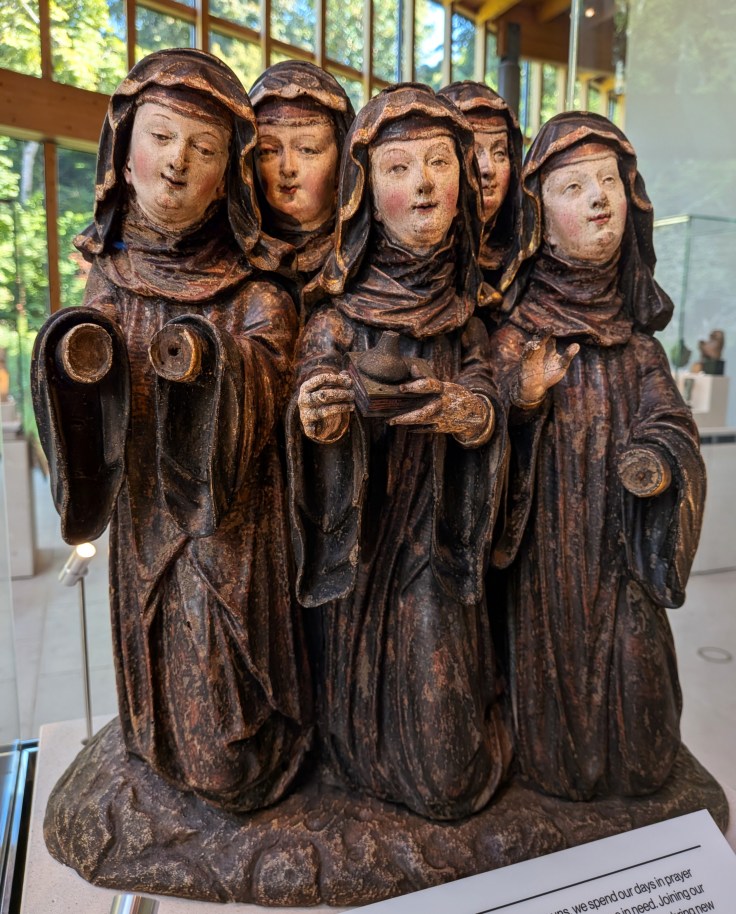
Saint Walburga of Eichstätt with Nuns (c1600-1625 CE)
by Martin Zürn, Burrell Collection, photo by cjverb (2026)
Swabian Flow: Carved from limewood, Saint Walburga of Eichstätt with Nuns (c1600-1625 CE) depicts five sisters from the Benedictine Order. In his signature Swabian style, Zürn’s figures are soft, serene, and deep folds in their clothing add flowy-ness and weight. Notice how their veils flutter around their faces, the delicate creases in their wimples, and the heavy fabric of their massive sleeves cascading past their waists.
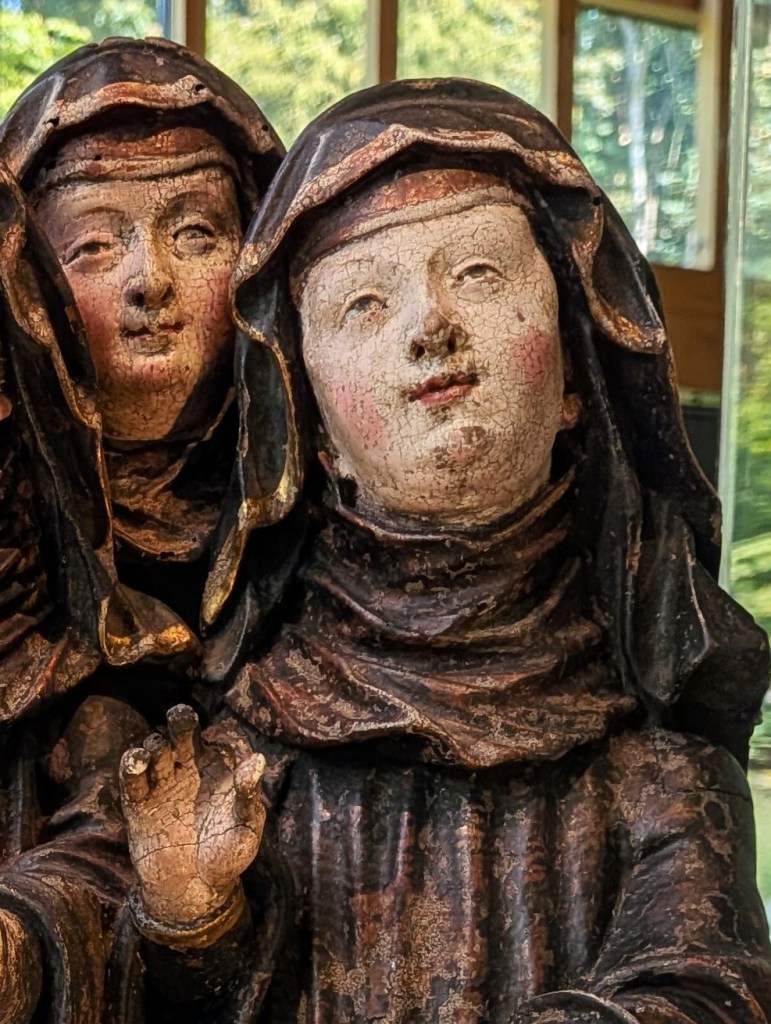
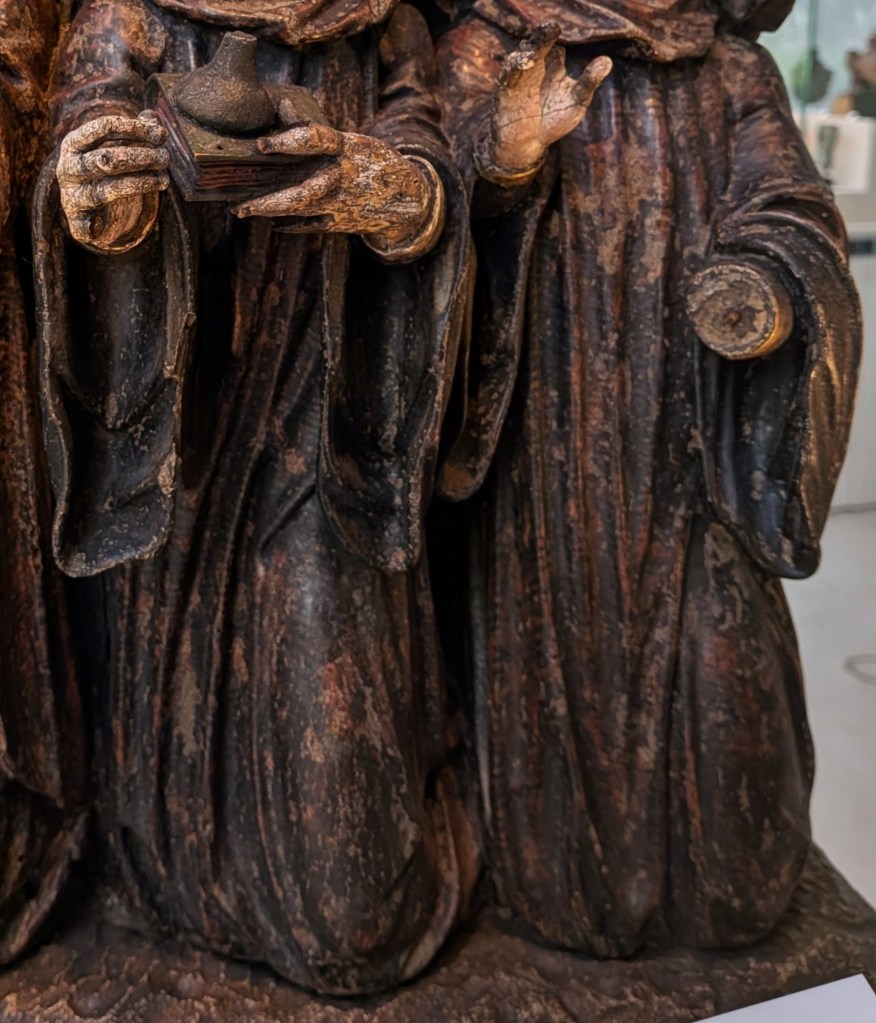
Closeups of Saint Walburga of Eichstätt with Nuns (c1600-1625 CE)
by Martin Zürn, Burrell Collection, photo by cjverb (2026)
Although they are dressed in identical habits, the nuns’ faces are unique. Note their plump, rosy cheeks and pencil-thin eyebrows. Each nun gazes in a different direction but huddled together they appear chummy and content.
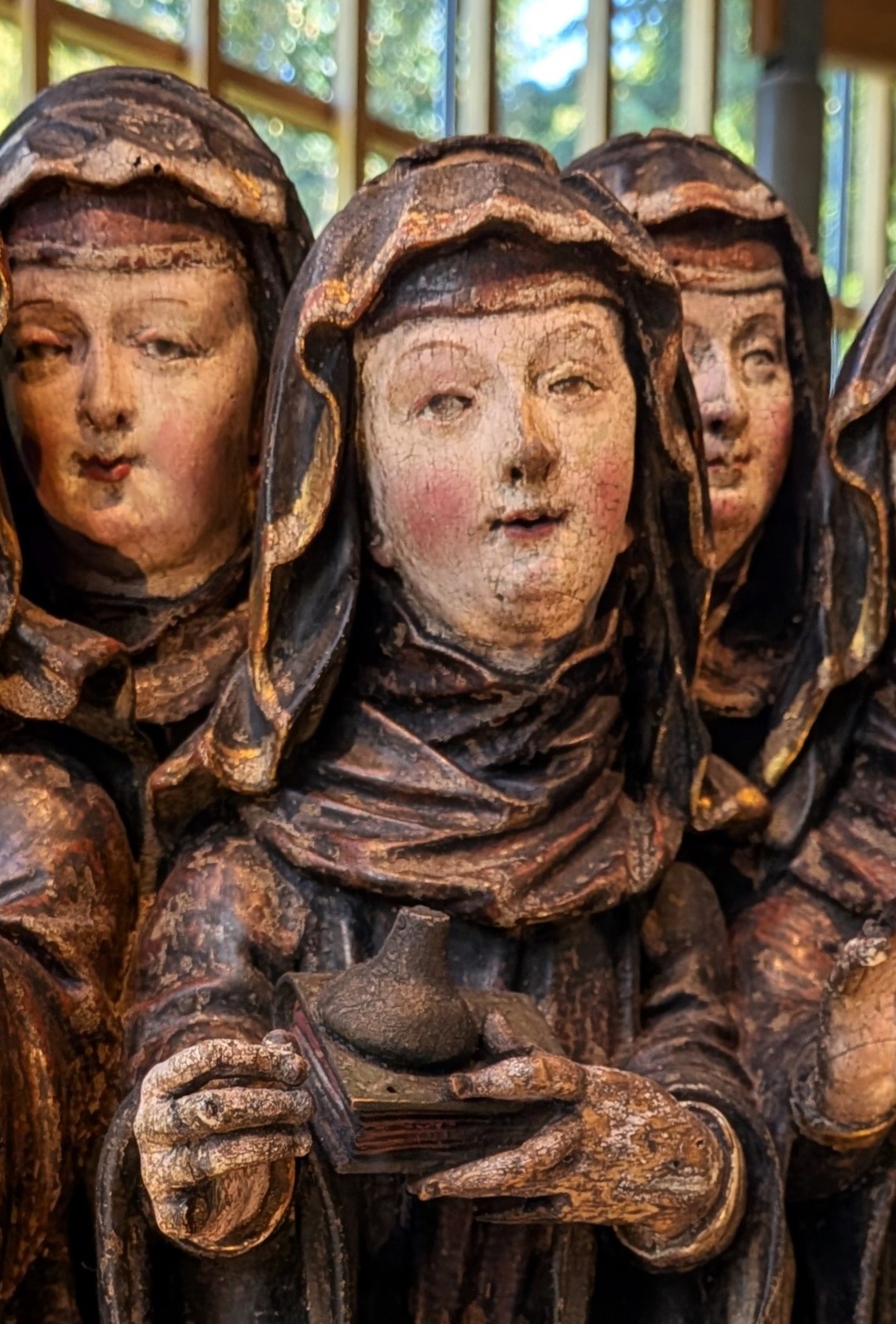
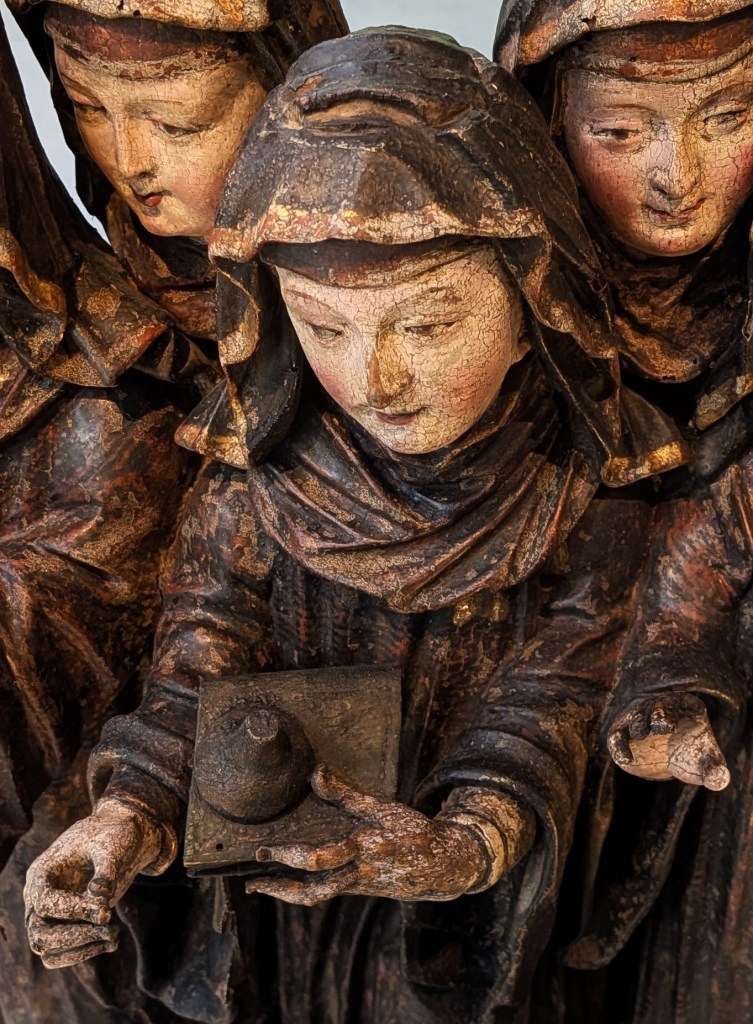
Closeups of Saint Walburga of Eichstätt with Nuns (c1600-1625 CE)
by Martin Zürn, Burrell Collection, photo by cjverb (2026)
Iconic: St. Walburga is at the center of this holy quintet. In one hand she holds a book and a flask of oil. In the other she grasps a missing crozier (long staff with a curved top) and a notch on top of her head once held a crown. Along with her Benedictine habit, these icons identify her in works of art.
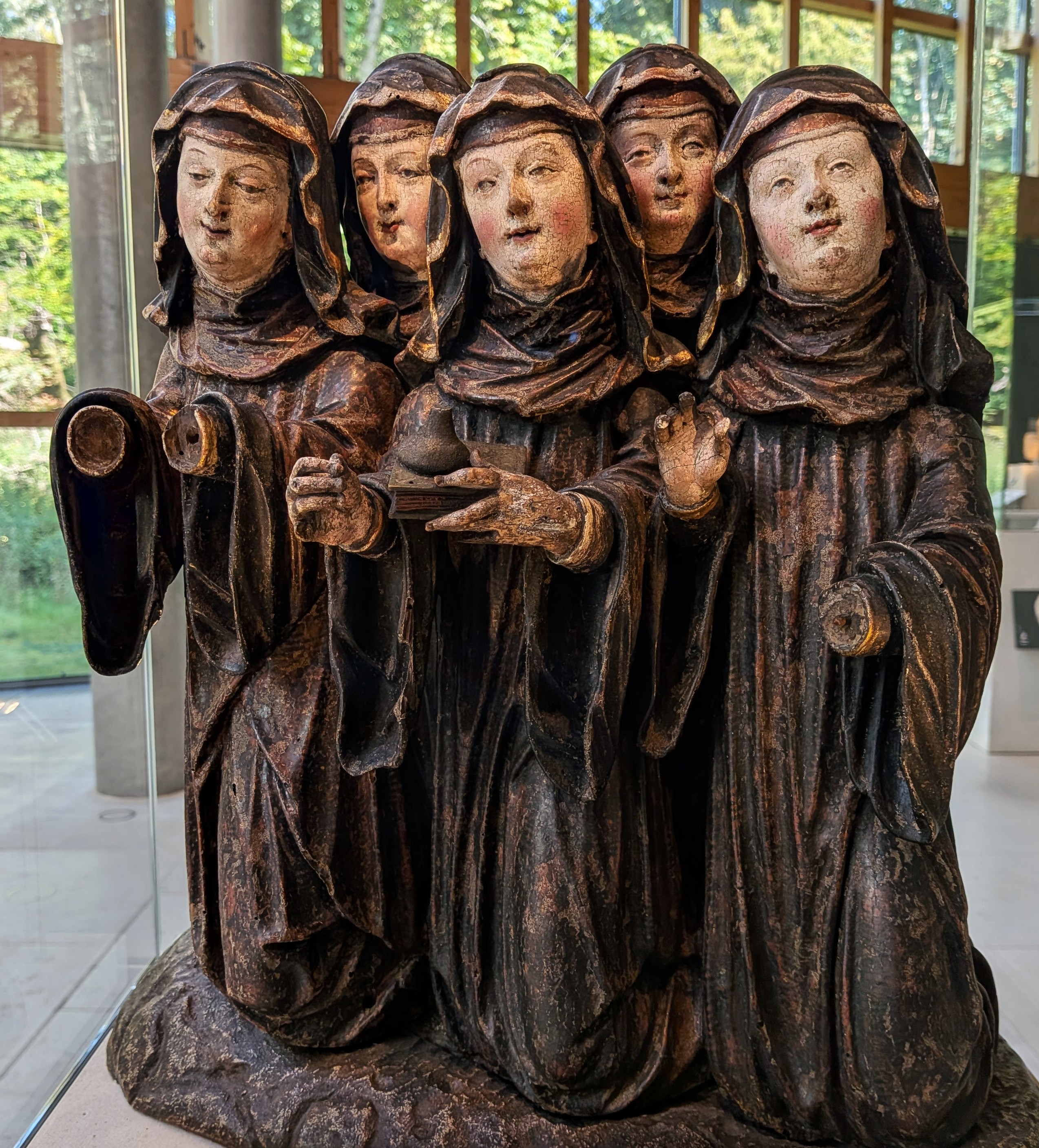
Saint Walburga of Eichstätt with Nuns (c1600-1625 CE)
by Martin Zürn, Burrell Collection, photo by cjverb (2026)
Cheery: The nuns on each side of St. Walburga are missing hands. The paint on the entire piece is crackled and worn, and the gilding has faded. Despite this wear and tear, the nuns’ rosy-cheeked cheeriness is infectious and brought a smile to my face when I stumbled across it at the Burrell Collection in Glasgow. I hope you enjoy it too🙂
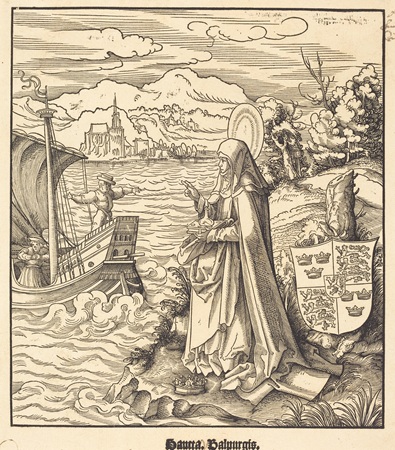
Woodcut of Saint Walpurgis Calming a Storm (c1516-1518)
by Leonhard Beck, National Gallery of Art
The Family that Prays Together: Saint Walburga (aka St. Walpurga or St. Walpurgis; c710-779) was born in the Kingdom of Wessex, located in southern England. There is no record of her birth name, but we do know her mother was St. Wuna of Wessex and her father, St. Richard the Pilgrim, was a West Saxon chieftain. When Walburga was about 11 years old, she was enrolled in the Benedictine Monastery in Wimborne (modern-day Dorset) where she was educated and eventually took vows to become a nun.
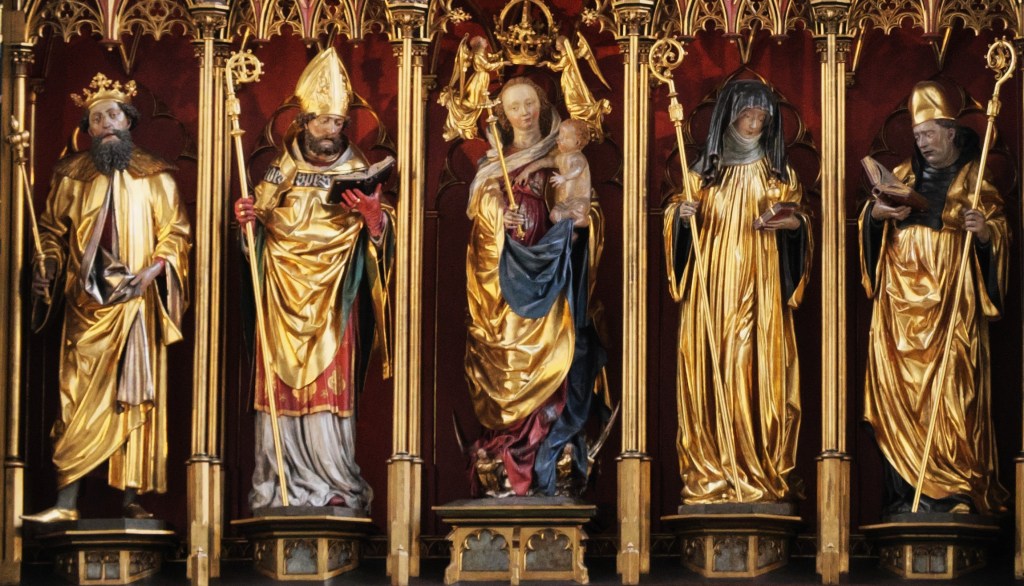
Closeup of Eichstätt Cathedral High Altarpiece (c1470)
Left to Right: St. Richard the Pilgrim, St. Willibald, Virgin Mary & Jesus, St. Walburga & St. Winibald
Photo (cropped) by GFreihalter, Wikimedia Commons
When the Saints Go Marching In: In the mid-700s, at the request of her uncle, St. Boniface (c675-754), Walburga moved to what is today southern Germany, to help convert the Germanic people to Christianity. Her brothers, St. Willibald (c700-787) and St. Winibald (c702-761), had also relocated to this area, to work for the Church. Willibald became the Bishop of Eichstätt, and in Heidenheim, Winibald established a double monastery which included both monks and nuns.
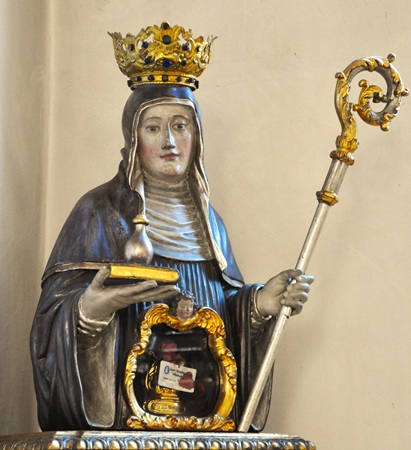
St. Walburga, St. Peter’s Church Munich
Photo (cropped) by Richard Huber, Wikimedia Commons
Walburga eventually joined her brother at the Heidenheim Monastery. She also wrote and published stories about her eldest brother, Willibald’s travels throughout Palestine, making her the first female author in England and Germany. After Winibald’s death, Walburga became abbess of the monastery and she remained in this position until her death in late February of c779.
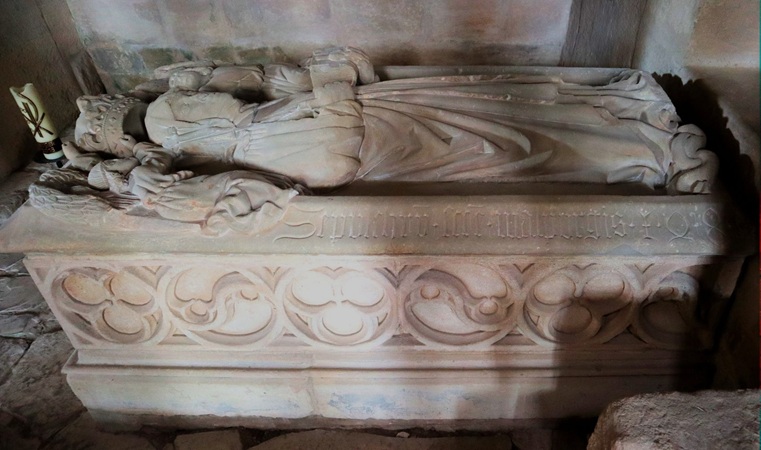
Tomb of Saint Walburga at Heidenheim, photo by Joachim Schäfer, Wikimedia Commons
Saintly Oil: Throughout her life, Walburga is believed to have performed several miracles, including calming a storm, healing a young girl who was thought to be dead, and illuminating a monastery after a monk denied her a torch. On May 1, 870 she was canonized a saint by Pope Adrian II (792-872) and her relics (i.e., bones) were subsequently moved from Heidenheim to Eichstätt, where her brother, St. Willibald was interred. In 1035 the Abbey of St. Walburga was established at her burial site and Benedictine nuns tending her relics noticed they were producing an “aromatic healing fluid”. Soon after, the faithful began making pilgrimages to the site with the hope of finding cures. Today, nuns from the abbey continue to offer St. Walburga’s oil from October 12th through February 25th, the date of St. Walburga’s death.
Arty Facts

Elevation of the Cross
St. Walpurgis & St. Amand (1610)
by Peter Paul Rubens
Web Gallery of Art
- St. Walburga is the patron saint of sailors and is prayed to for protection from storms and rabies. Many northern European communities honor her on the eve of May 1st.
- Swabian style art is named after the historic southwestern territory of modern-day Germany where Martin Zürn (c1585-1655) lived and worked. Like St. Walburga, Zürn also came from a highly influential family. His father, brothers, sons and nephews were also highly skilled sculptors of religious art, primarily during the Counter Reformation.
- According to the Northern Colorado chapter of St. Walburga’s Abbey website, scientific testing of St. Walburga’s oil indicates it “has the properties of spring water”.
- Saint Walburga has been beautifully portrayed in Peter Paul Rubens iconic altarpiece, Elevation of the Cross (1610) which was originally located on the high altar of Saint Walburga Church in Antwerp, Belgium.
If you’d like to learn more about the life and relics of Saint Walburga, click on this Abbey of St. Walburga link. That concludes our look at Saint Walburga. I’ll be back next week, with more Museum Bites, until then be safe, be kind, and take care🙂

Cover photo by DeirdreGirl, courtesy of Pixabay.
Sources:
Christian Icongography: Saint Walburga
Encyclopedia Britannica: Saint Walburga
Glasgow Museums: Saint Walburga of Eichstätt with Nuns (c1600-1625 CE)
Pixabay: Elderly Catholic Nuns by DeirdreGirl
SmartHistory: Elevation of the Cross (1610) by Peter Paul Rubens
Web Gallery of Art: Martin Zürn


Leave a Reply