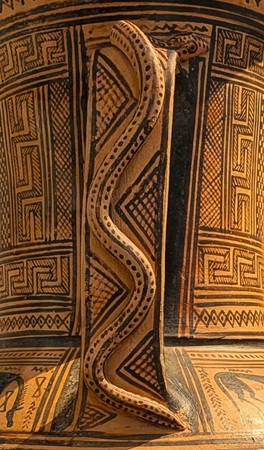
Happy Friday! Today on Museum Bites we’re continuing our crawl through the Museum of Fine Arts in Boston (MFAB) with a look at ceramic snake art that slithers and charms. Earthy, rustic, and a bit shy, these serpents are a celebration of life and death. We begin with a snake amphora from ancient Greece…
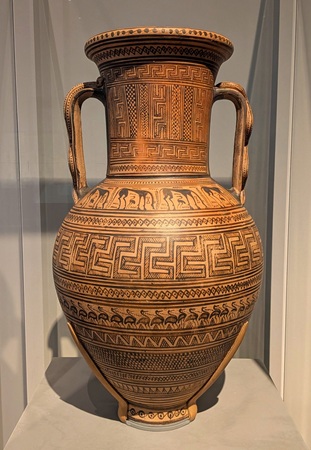
Ceramic Amphora with Snake Handles (735-720 BCE)
Birdseed Painter, Museum of Fine Arts Boston, photo by cjverb (2026)
Dots & Triangles & Zigzags, Oh My! Handcrafted from clay during the latter part of the Geometric Period (c900-700 BCE), this stunning amphora is attributed to the Birdseed Painter. Typical of the Late Geometric Period, this ancient vessel is almost entirely covered with geometric designs. From lip (rim) to foot, note the dizzying array of dots, lines, lozenges (diamonds), meanders (aka Greek key), checkerboards, chevrons, triangles, and zigzags.
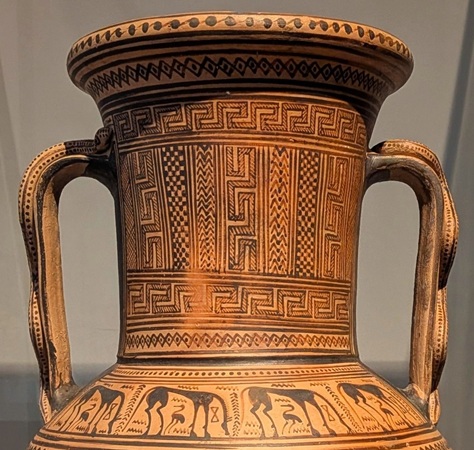
Ceramic Amphora with Snake Handles (735-720 BCE)
Birdseed Painter, Museum of Fine Arts Boston, photo by cjverb (2026)
Animal Crossing: The first figural pattern appears at the amphora’s shoulder where a series of horses—a symbol of the owner’s wealth—graze next to long-legged water birds. Moving down the body, notice the single band of ducks marching in single file around the amphora. The space between the ducks is decorated with a diagonal row of dots representing hemp seeds, the Birdseed Painter’s signature design and namesake.
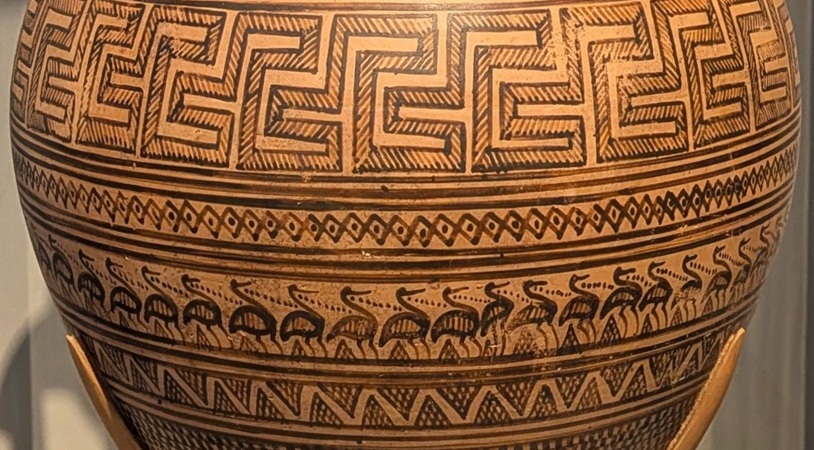
Ceramic Amphora with Snake Handles (735-720 BCE)
Birdseed Painter, Museum of Fine Arts Boston, photo by cjverb (2026)
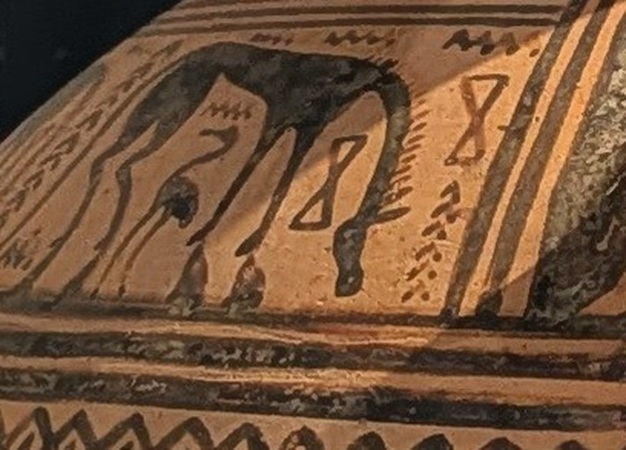
Human Touch: Although the artist repeats every pattern with painstaking, almost mechanical precision, there are a few spots that have a more human touch. For example, the number of seeds between the birds ranges from 7 to 10 depending on the amount of space available. Also, note how the artist squeezes just one more duck into this feathery fowl parade. Perhaps the missing triangle located between the birds on one side caused the cramped spacing on the opposite side.
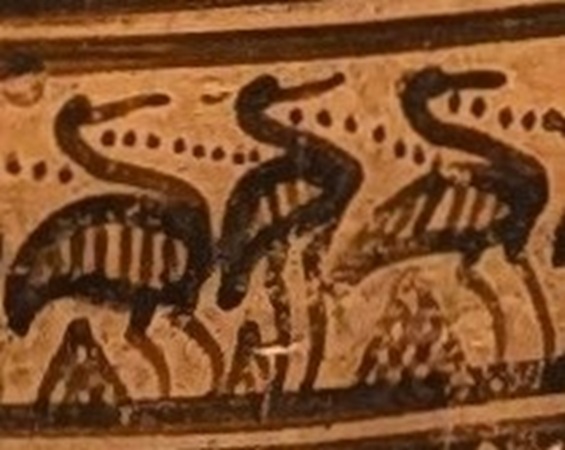
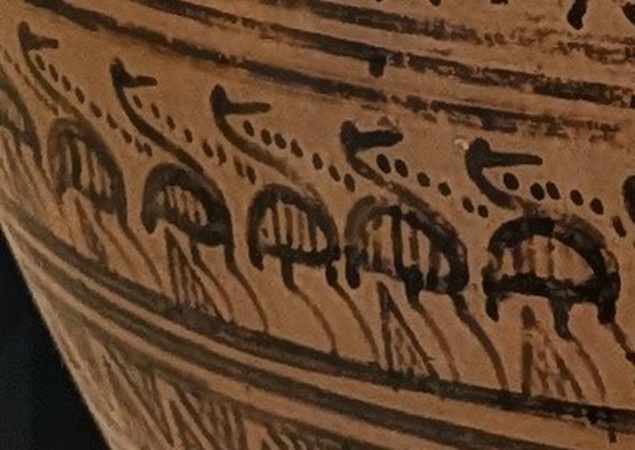
Closeup of Duck Squeeze (left) & Missing Triangle (right)
Ceramic Amphora with Snake Handles (735-720 BCE)
Birdseed Painter, Museum of Fine Arts Boston, photo by cjverb (2026)
Charmed: Similar to the silver pitchers in part one of our serpentine series, this amphora features snake handles, but these vipers are less bitey. Decorated with alternating rows of dots and thin black lines, each snake slithers up a handle while their heads gently rest again the neck of the amphora, as if giving it a hug. Note how the Birdseed Painter fills the empty space between the curves of the snakes’ bodies and below the handles with hatched triangles and thick black bands of paint.
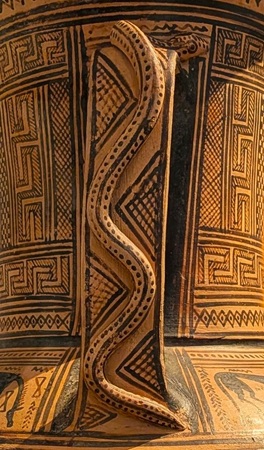
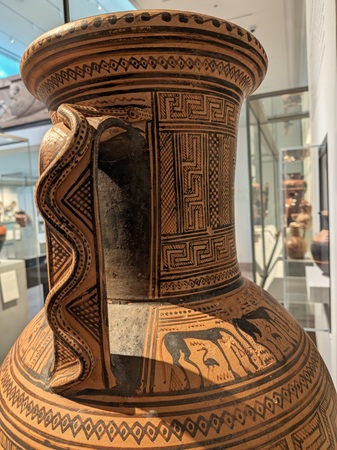
Ceramic Amphora with Snake Handles (735-720 BCE)
Birdseed Painter, Museum of Fine Arts Boston, photo by cjverb (2026)
Funeral Art: Amphorae (plural of amphora) are storage jars that can be used for shipping products, serving beverages, as well as decorating the graves of ancient Greeks. Monumental amphorae (3 or more feet tall) were used as grave markers, while smaller vessels, like this snake amphora, were buried with the deceased either as a grave good or a cinerary urn. It is unclear which purpose MFAB’s snake amphora served.
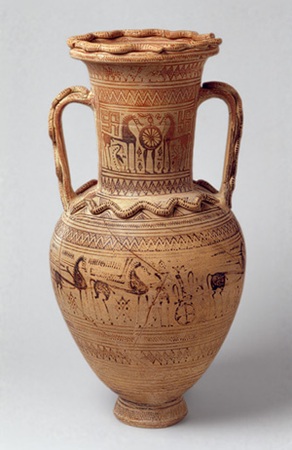
Terracotta Neck-Amphora (c710 BCE)
Attica, Greece, Metropolitan Museum of Art
Underworld: Snakes are frequently featured on ancient Greek funerary art because their burrowing habits connect them to the earth and the underworld. They also shed their skin which is a symbol of renewal. Compared to last week’s vicious vipers, these polka-dotted snakes appear friendly, benign, even cute and were no doubt a charming addition the deceased’s grave.
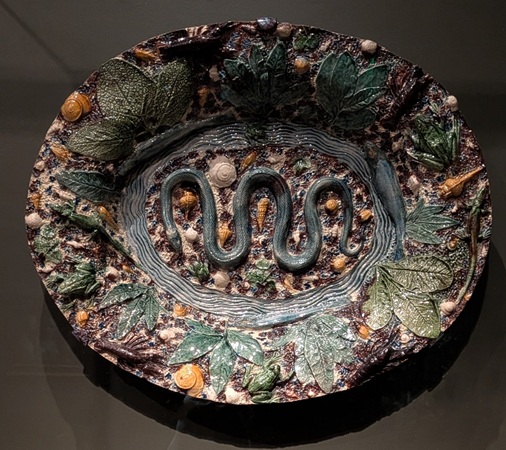
Rustiques Figulines (c1570-1585) attributed to Bernard Palissy
Museum of Fine Arts Boston, photo by cjverb (2026)
What’s for Dinner? Our final piece of snake art is a lead-glazed ceramic platter (c1570-1585) attributed to French potter, Bernard Palissy. Crafted from molds of actual aquatic specimens, called life casts, this highly realistic dish features fish, frogs, lizards, and shellfish nestled among the aquatic plants.
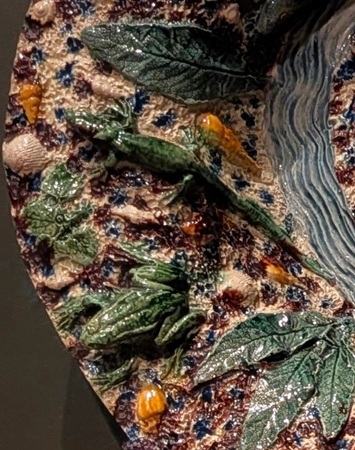
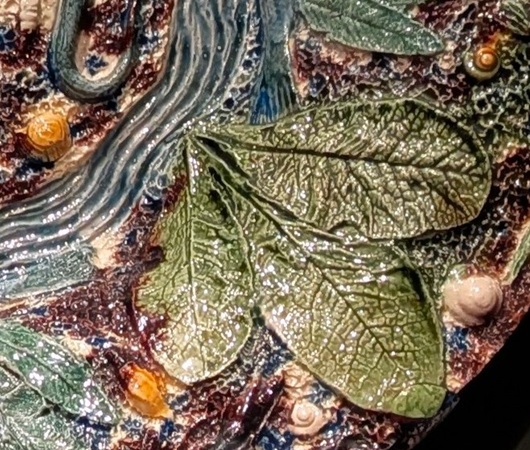
Rustiques Figulines (c1570-1585) attributed to Bernard Palissy
Museum of Fine Arts Boston, photo by cjverb (2026)
Et Voilà! The host just adds water and voilà! Le bassin is transformed into a tabletop riverbed burbling with life. The pièce de résistance is the aquamarine snake resting at the bottom. Note how its scaly body gently weaves around the seashells. Although this serpent is relaxed and subdued, Palissy’s colorful dish was no doubt a topic of lively dinner conversation.
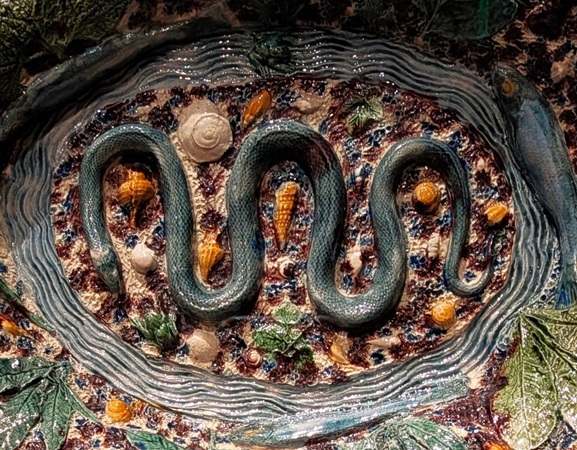
Rustiques Figulines (c1570-1585) attributed to Bernard Palissy
Museum of Fine Arts Boston, photo by cjverb (2026)
Rustic Ware: Bernard Palissy (1509-1590) was born in Lacapelle-Biron, in southern France. A noted scientist and writer, Palissy is best-known in the art world as a potter. Despite having no formal training in ceramics, his rustiques figulines (rustic ware) were highly sought after. So much so his skill with clay got him sprung from jail.
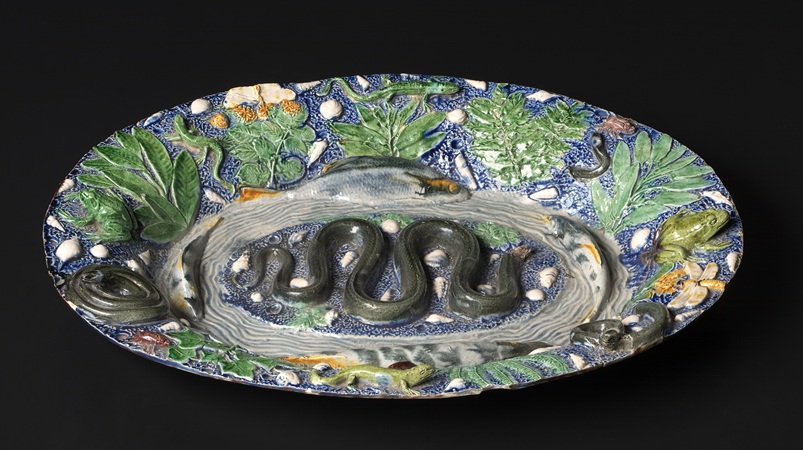
Rustic Platter (late 1500s) Bernard Palissy, Cleveland Museum of Art
Riche Réputation: Palissy was a devout and outspoken Huguenot (French Protestant). In 16th century France, this placed him in opposition to the ruling Catholic aristocracy and led to his imprisonment. His highly realistic rustic ware, however, caught the attention of France’s rich and powerful. Anne de Montmorency (1493-1567), the first Duke of Montmorency and influential constable of France, had Palissy released from prison so the talented potter could help decorate Chateau d’Ecouen, one of the Montmorency’s many residences.
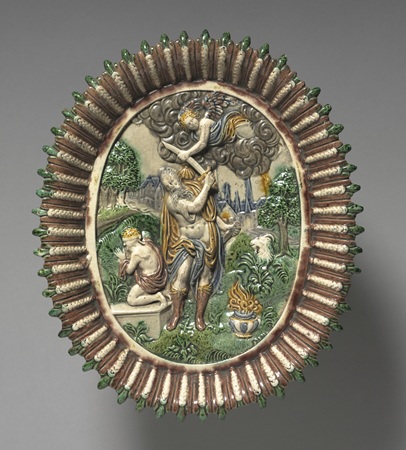
The Sacrifice of Isaac (late 1500s) Bernard Palissy, Cleveland Museum of Art
As Palissy’s reputation grew, Queen Catherine de’ Medici of France (1519-1589) hired Palissy and his sons to construct a ceramic grotto in the gardens of the Tuileries Palace in Paris. An admirer of his work, she served as Palissy’s protector during the Wars of Religion (1562-1598), a series of violent clashes between French Catholics and Huguenots.
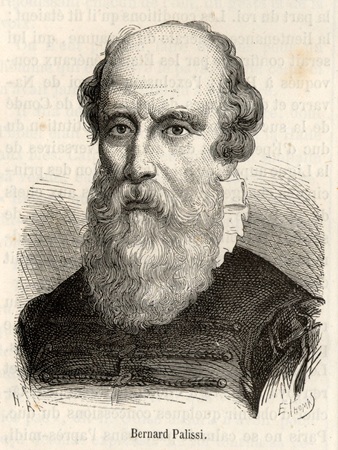
Bernard Palissy from A Popular History of France (1855–1859)
by Henri Martin, Wikimedia Commons
Natural History: In his 60s, Palissy started giving lectures on natural history in Paris. He championed the experimental method and helped establish modern agronomy which focuses on crop cultivation and soil management. Palissy published his talks in Discours Admirables (Admirable Discourses) in 1580. Just a few years later, the Wars of Religion intensified and Palissy was once again sent to prison in 1588. Two years later, he died in the Bastille. He was 81 years old.
Arty Facts
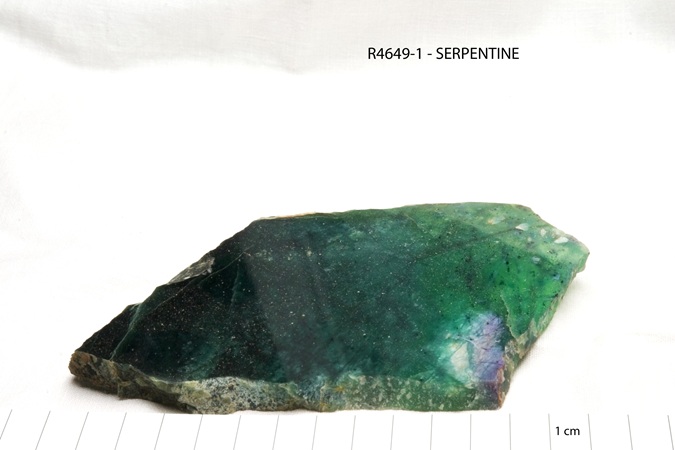
Serpentine
Smithsonian National Museum
of Natural History
- Serpentine is also a rock or mineral consisting primarily of a hydrous magnesium silicate. It was named for its mottled green, gray or yellow color which looks like snakeskin.
- The Birdseed Painter worked in Attica, (modern-day Athens area) from 735-710 BCE.
- During the Geometric Period in ancient Greece, grave goods were typically placed in adult men’s graves, but not in women’s.
- To create his life casts, Palissy collected his own specimens which deepened his understanding of the natural world and helped shape his theories.
That wraps up our serpentine series. I’ll be off next week for the Thanksgiving holiday and will be back in 2 weeks with more Museum Bites. Until then be safe, be kind and take care🍂
Sources:
Acropolis Museum: Oinochoe (735-710 BCE) by Birdseed Painter Workshop
Acropolis Museum: Skyphos (c750-720 BCE) by Birdseed Painter Workshop
Artsy: The Renaissance Artist Who Cast Live Snakes, Frogs, and Lizards to Make His Ceramics
British Museum: Oinochoe (c725 BCE) by Birdseed Painter
Cleveland Museum of Art: Rustic Platter (late 1500s) by Bernard Palissy
Cleveland Museum of Art: The Sacrifice of Isaac (late 1500s) by Bernard Palissy
Encyclopedia Britannica: Admirable Discourses by Bernard Palissy
Encyclopedia Britannica: Anne duc de Montmorency
Encyclopedia Britannica: Bernard Palissy
Encyclopedia Britannica: Geometric Style
Encyclopedia Britannica: Serpentine Mineral
Encyclopedia Britannica: Wars of Religion
Le Louvre: Revealing the Secret of Bernard Palissy’s Rusticware with Augmented Reality
Metropolitan Museum of Art: Geometric Art in Ancient Greece
Metropolitan Museum of Art: Terracotta Neck-Amphora (c710 BCE)
Museum of Fine Arts Boston: Lead-Glazed Earthenware Dish (c1570-1585)
Museum of Fine Arts Boston: Two-Handled Jar with Snakes on Handles (735-720 BCE)
SmartHistory: Terracotta Krater
Smithsonian National Museum of Natural History: Serpentine
The Art & Archaeology of Ancient Greece by JM Barringer
University of Colorado Boulder Dept of Classics: Geometric Period Pottery and Its Decoration


Leave a Reply