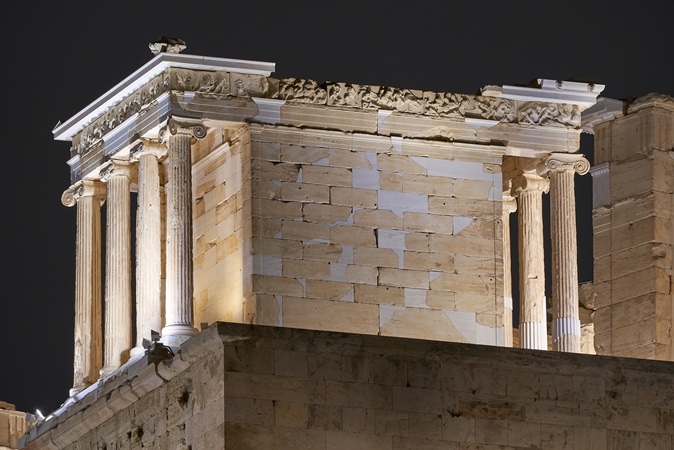
Today on Museum Bites we’re touring the Temple of Athena Nike (c426 BCE). Perched high above the city of Athens, this small but mighty temple is a lasting tribute to a goddess, a defiant symbol of victory, and a stunning example of ancient Greek ingenuity. Join me for a closer look at this iconic Ionic structure, but first a little background…
Temple of Athena Nike (426-421 BCE) by George E. Koronaios, Wikimedia
The Badass: Athena is one of twelve major Olympian gods from Greek mythology. This goddess of wisdom and war was born from Zeus’s forehead dressed in armor and bellowing a battle cry. Athena, however, is known for her diplomacy, intellect, and strategic planning, unlike her bloodthirsty half-brother, Ares. She also bested her uncle, Poseidon, to become the patron goddess of Athens, because her gift of an olive tree was more well received than Poseidon’s saltwater spring.
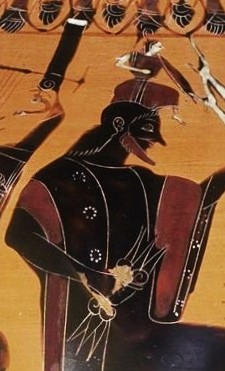
Closeup of Black-Figure Amphora with Birth of Athena (c540 BCE)
Artist attributed to Group E, Yale University Art Gallery
Athena is frequently featured with a helmet, owl, olive tree, and/or Aegis (a shield, breastplate or cloak featuring the head of Medusa). Athenians have built many temples honoring their patron goddess, most notably the monumental complex known as the Acropolis of Athens where the Temple of Athena Nike resides.
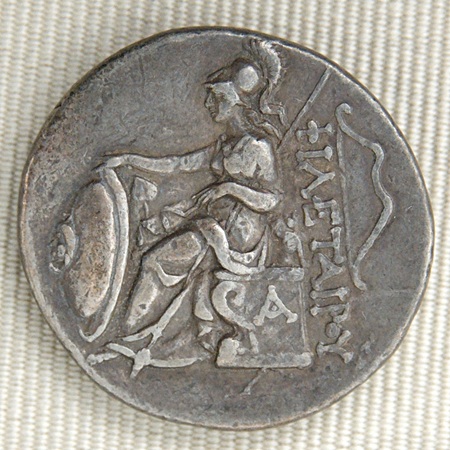
Tetradrachm of Eumenes I featuring Athena (c263–241 BCE)
Museum of the Bibliothèque Nationale de France
The Sidekick: Nike is the goddess of victory in war and competition. She is a minor goddess and serves as a sidekick to major gods like Athena and Zeus. Nike is identified by her diminutive stature, wings, and laurel wreath. Occasionally she carries a palm branch or Hermes staff, indicating she is the messenger of victory. There are no reported temples dedicated solely to Nike.
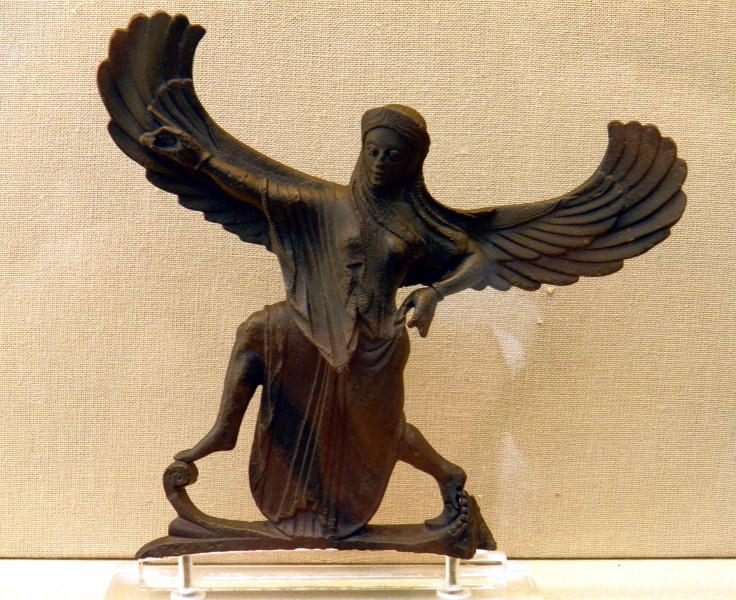
Bronze Figure of Nike (c500 BCE) British Museum
Photo by Carole Raddato, Wikimedia
The Dynamic Duo: Athena Nike means “Athena the Victorious”. It is a title given to Athena when she is accompanied by Nike, and when victory is attained through Athena’s wisdom and strategy. The Temple of Athena Nike is a tribute to the Athenian’s protector and patron goddess. It also celebrates Nike (victory!) and Athenian triumphs in battle.
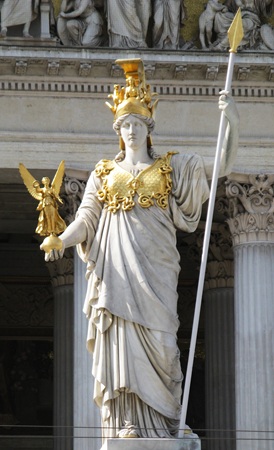
Statue of Pallas Athena and Nike
Austrian Parliament Building Vienna
Photo by Yair Haklai, Wikimedia
Don’t Ruin the Ruin: At first glance you may look at the Temple of Athena Nike and think it’s just a battered old building. The roof is gone, the columns are chipped, and the sculptures that have survived are broken and worn. And let’s not forget, the paint has long chipped off. Yes, it was colorfully painted. But as we dive into the details, I encourage you to look beyond these imperfections, because the temple was built with meticulous precision, by hand and without mortar. It has stood overlooking the city as a beacon of inspiration and devotion, to not one but two goddesses for more than 2,000 years. Let’s dig in…
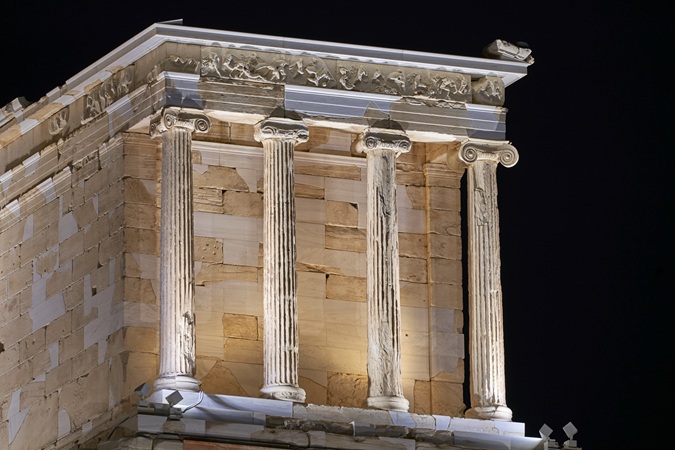
Temple of Athena Nike, Acropolis (426-421 BCE) Photo by George E. Koronaios, Wikimedia
Iconic Ionic: The Temple of Athena Nike is the smallest structure on the grounds of the Acropolis. Made of Pentelic marble, this temple is an excellent example of the Ionic order, an architectural style designed by the ancient Greeks.
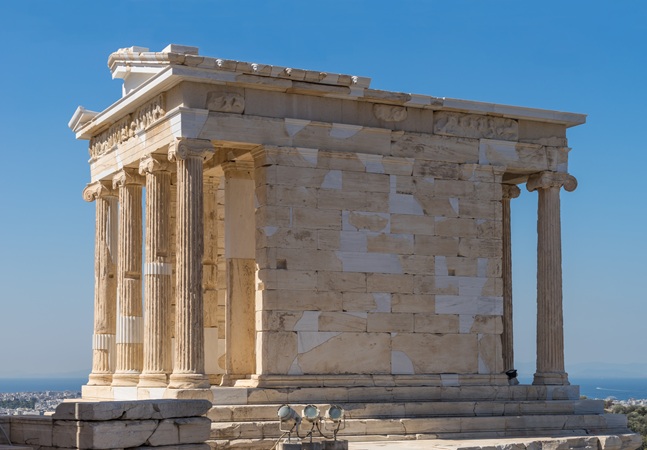
Temple of Athena Nike, Acropolis (426-421 BCE) Photo by George E. Koronaios, Wikimedia
There are four columns on both the front and back of the temple. Each column was handcrafted from a single piece of marble, and the top (aka capital) is decorated with scroll-shaped flourishes called volutes.
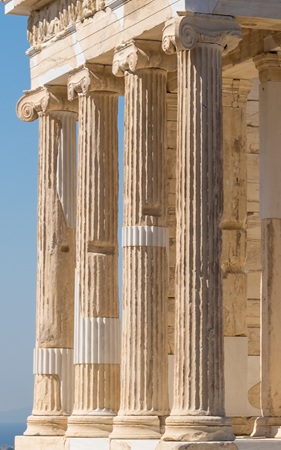
Temple of Athena Nike Closeup of Columns (426-421 BCE)
Photo by George E. Koronaios, Wikimedia
Above the columns, a horizontal band called a frieze, wraps around the temple. Heavily damaged, the frieze features relief carvings of the major gods above the entrance on the eastern side, and intense battle scenes of the Greeks defeating their various enemies on the other sides, most notably their defeat of the Persians at Marathon in 490 BCE.
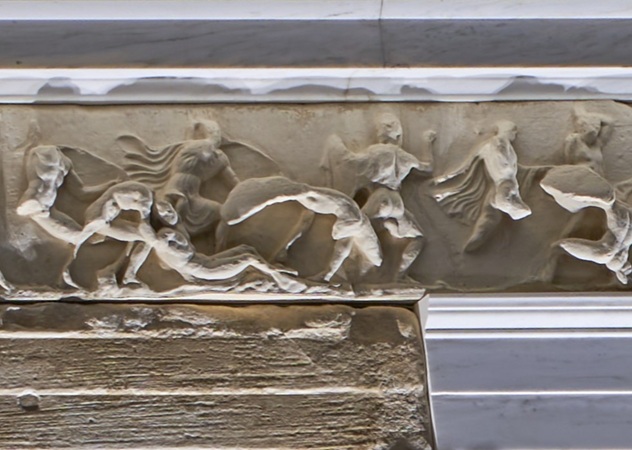
Temple of Athena Nike, Closeup of Frieze (426-421 BCE)
Photo by George E. Koronaios, Wikimedia
Above the frieze, the pediments, a triangular section of the upper wall where the roof peaks, once held sculptures of mythical Greek battles. At one time, the temple’s roof featured a gilded bronze Nike atop each corner.
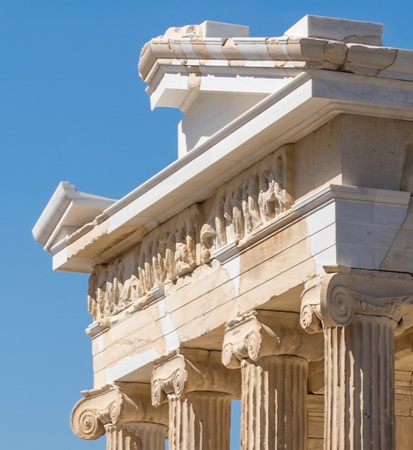
Temple of Athena Nike Closeup of Pediment (426-421 BCE)
Photo by George E. Koronaios, Wikimedia
Inside the temple a sacred chamber called a cella once contained a wooden statue of Athena. In one hand, Athena held a pomegranate, and in the other, her helmet to signify both her pacifist (pomegranate) and warrior (helmet) nature. Ancient Greek historian and travel writer, Pausanias (c115-180 CE), referred to this statue as Apteros Nike, “Wingless Victory” or Athena Apteros “Athena the Wingless”. As patron and protector of Athens, Athena’s lack of wings meant victory would never fly away from the city.
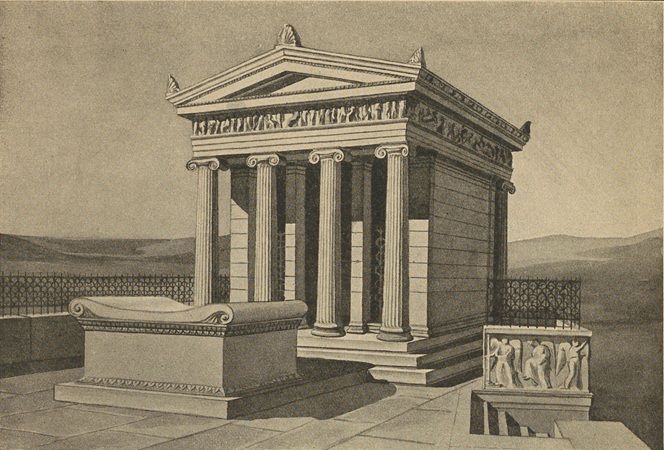
Drawing of the Temple of Athena Nike (1905) by Hermann Luckenbach
National Library of Poland, Wikimedia
Walking up the Sacred Way, ancient visitors to the Acropolis could catch a glimpse of the temple and relief sculpture of Nike decorating a low wall (aka balustrade) surrounding the temple (see image above). These images featured Nike in various poses preparing to pay tribute to Athena. The wall was subsequently added to the temple grounds to prevent visitors from wandering off the cliff. It is no longer onsite, but what remains of these carvings are on display in the Acropolis Museum.
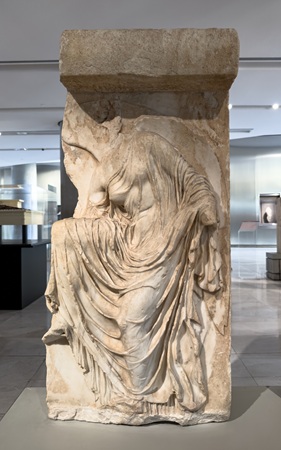
Nike Adjusting Her Sandal, Temple of Athena Nike Balustrade (c410)
Acropolis Museum, Photo by Niko Kitsakis, Wikimedia
Arty Facts
- Only priestesses were allowed inside the temple. Worshipers could catch a glimpse of Athena Apteros when attending sacrifices made at the altar, located on the grounds near the temple’s entrance.
- The Ionic architectural order is considered more delicate and feminine, and typically used on smaller structures. Click on this SmartHistory: Greek Architectural Orders link for a deeper dive.
- Relief sculpture is an artwork where three-dimensional figures have been carved from and remain attached to a flat (two-dimensional) background.
- The bright white sections embedded in the temple are modern pieces of marble that have been fashioned to replace missing portions of the temple.
But wait there’s more! If you would like to see 3D images of a fully restored and painted(!!) temple, click on this Anasynthesis: Temple of Athena Nike link. If you’d like to learn more about the Acropolis, click on this Encyclopedia Britannica: Acropolis of Athens link.
That concludes our tour through the Temple of Athena Nike. I’ll be back next week with more Museum Bites, until then be safe, be kind, and take care😊
Sources:
Acropolis Museum: Temple of Athena Nike
Anasynthesis: Temple of Athena Nike
Encyclopedia Britannica: Aegis
Encyclopedia Britannica: Acropolis of Athens
Encyclopedia Britannica: Architectural Order
Encyclopedia Britannica: Athena
Encyclopedia Britannica: Ionic Order
Encyclopedia Britannica: Temple of Athena Nike
Smart History: Greek Architectural Orders
Smart History: Temple of Athena Nike
The Art and Archaeology of Ancient Greece (2014) by Judith M. Barringer
 Museum Bites
Leave a comment