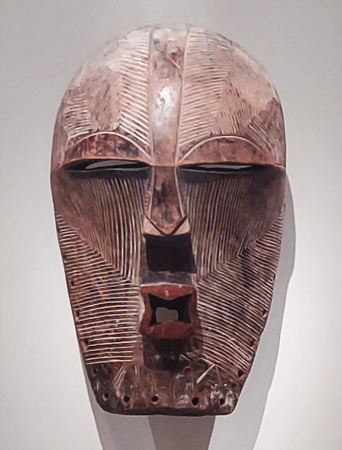
Today on Museum Bites we’re stepping into the spirit world with a kifwebe [pronounced kiff WAY bay]. Handcrafted by Songye smiths, this ceremonial mask celebrates both the celestial and the civic. Join me as we take a closer look at this fascinating face mask and its benevolent role in protecting a community.
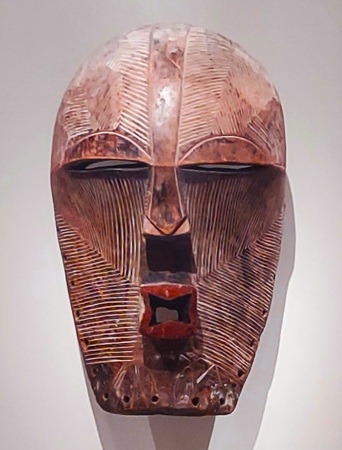
Female Kifwebe (19th-early 20th century) Songye Artist
Metropolitan Museum of Art, Photo by cjverb (2025)
Hand carved from wood, note the kifwebe’s prominent facial features; the hooded eyes, blunt nose, and square mouth with protruding lips. A smooth band, that was once painted black, bisects the head and runs down between the eyes ending in a point at the tip of the nose.
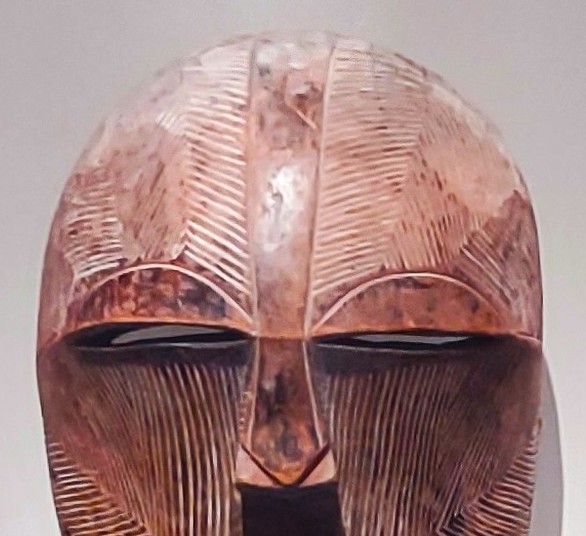
Closeup of Female Kifwebe (19th-early 20th century) Songye Artist
Metropolitan Museum of Art, Photo by cjverb (2025)
Linear patterns of incised grooves called striations, decorate almost the entire mask. From the upper cheeks to the lower chin, a series of holes have been drilled into the kifwebe’s border. At one time, this mask was painted white with black accents, but these pigments have worn off.
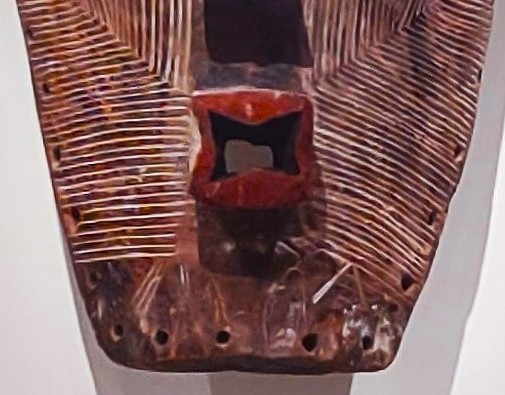
Closeup of Female Kifwebe (19th-early 20th century) Songye Artist
Metropolitan Museum of Art, Photo by cjverb (2025)
Masking: Masks and masquerades play a vital role in many African cultures. These masks are more than decorative, because they serve as an intermediary between a community and the spiritual world. When a mask is first created, a spirit is often believed to reside within a mask. This spirit can be an animal, ancestor, deity or natural force. Accompanied by music and dance, the masquerade is an opportunity for this spirit to appear to the community. Songye masks are a composite of several different animals and designed to appear otherworldly.
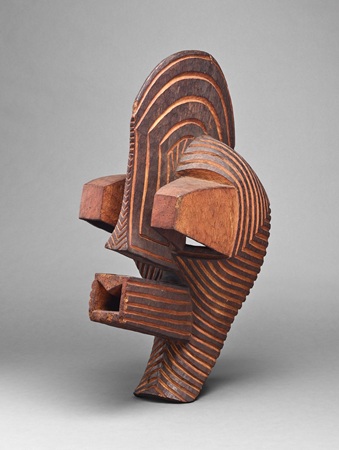
Male kifwebe (early 20th century)
Songye People, The British Museum
Community Service: The Songye live in the southeastern region of the Democratic Republic of the Congo (DRC). Large villages are ruled by chiefs and an all-male society called the Bwadii bwa Kifwebe, maintains order, enforces the law, and provides protection for the community. Certain members of the Bwadii bwa Kifwebe don bifwebe (plural form of kifwebe) and perform masquerades during important community events, such as the inauguration or funeral of a chief, initiations, and new moon ceremonies.
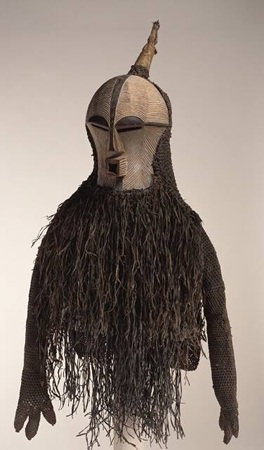
Female Kifwebe with Bodysuit (late 19th century)
Songye People, Nelson Atkins Museum of Art
Feminine Purity: A Songye smith handcrafts three different types of bifwebe, a female mask and two male masks. The female mask is the first to be carved and there is only one in each community. It is painted white with black accents and covered with striations. White represents health, purity, and fertility.
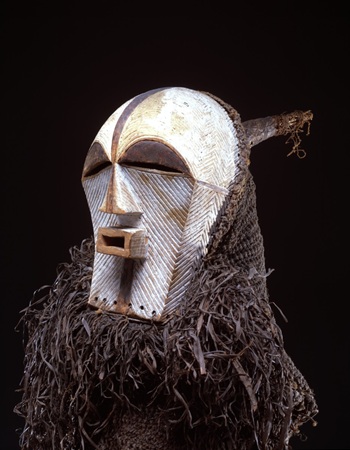
Left: Female Kifwebe (19th-early 20th century) Songye Artist, Metropolitan Museum of Art, Photo by cjverb (2025)
Right: Female Kifwebe with bodysuit (late 19th-early 20th century) Songye Artist, Dallas Museum of Art
Masculine Vitality: Several male masks are created for the community and they come in two types, the elder and the youth. Like the female kifwebe, the male masks are covered with incised grooves, but their facial features are more dramatically pronounced. Male masks also have a forehead crest and are typically painted red, white, and black. Red represents power and vitality, white symbolizes health and well-being, and black serves as an accent color. Male elder masks are larger and have more red pigment and exaggerated features. Both male and female bifwebe are worn by men who belong to the Bwadii bwa Kifwebe. Their identity is further disguised by a raffia body suit. The raffia is threaded and tied to the holes running along the border of the kifwebe securing the mask to the bodysuit.
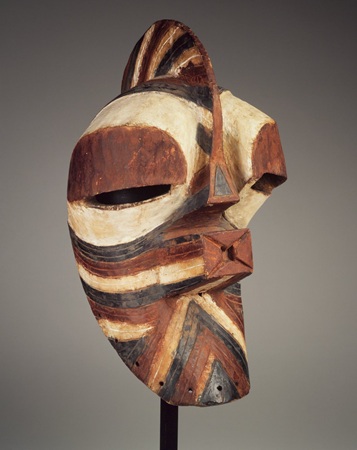
Male kifwebe (late 19th-early 20th century)
Songye People, Brooklyn Museum
Feminine Benevolence: The female kifwebe masquerade is performed in a specified area and the masquerader’s movements are fluid and controlled. The purpose of this lone masquerader is to call forth benevolent powers and unmask evil influences.
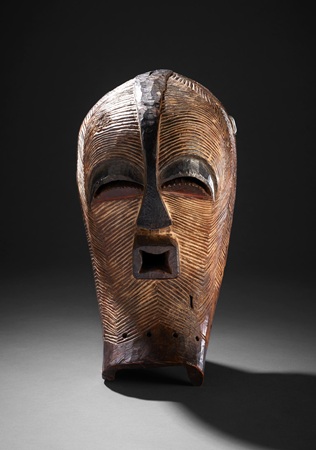
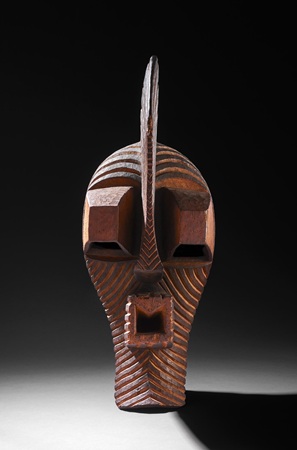
Female (left) & Male (right) bifwebe (early 20th century) Songye People, The British Museum
Masculine Malevolence: In contrast, male bifwebe masquerades include multiple masqueraders whose performance is erratic and aggressive. They can blow smoke through the mask’s openings, perform acrobatic stunts, run through the community with switches, and charge at community members, especially those who are considered rule breakers. Exciting and intimidating, these masquerades are believed to ward off evil and safeguard the community, which is the primary purpose of the Bwadii bwa Kifwebe.
Arty Facts
- Like their Songye neighbors, the Luba have similar bifwebe (see photo below).
- The Songye claim their masks come from Luba, and vice versa. This emphasis on foreignness by both groups enhances their bifwebe’s otherworldliness.
- The New Moon is the first of eight lunar phases and occurs when the Sun illuminates the side facing away from the Earth, making it invisible from our perspective. Today, the Moon is transitioning from a New Moon to a Waxing Crescent.
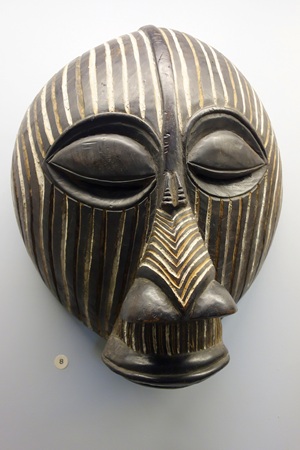
Kifwebe (no date) Luba People
Royal Museum for Central Africa
That wraps up our look at the Songye and their bifwebe. If you’d like to view more kifwebe, click on this Wikimedia Commons: Kifwebe link. To learn more about the role of masquerades in African cultures, click on this Encyclopedia Britannica: Masquerade Dancers link. I’ll be back next week with more Museum Bites. Until then, be safe, be kind, and take care😊
Sources:
African Arts: Further Perspectives on Kifwebe Masquerades (2020) by Dunja Hersak
African Arts: Hidden Treasures of the Tervuren Museum (1995) by Gustaaf Verswijver
African Arts: On the Concept of Prototype in Songye Masquerades (2012) by Dunja Hersak
Encyclopedia Britannica: Masquerade Dancers
Brooklyn Museum: Kifwebe (Mask)
Dallas Museum of Art: Kifwebe and Costume
Flint Institute of Arts: Kifwebe Mask
Google Arts & Culture: Female Kifwebe
Kifwebe: A Century of Songye and Luba Masks (2019) by François Neyt, et. al.
Metropolitan Museum of Art: Kifwebe Bakashi (female mask)
Minneapolis Institute of Art: African Masks and Masquerades
Nelson Atkins Museum of Art: Mask of the Bwadi bwa Kifwebe Society
 Museum Bites
Leave a comment